Article: Pot Filler Pros and Cons: Wall-Mounted or Built Into Your Faucet

Pot Filler Pros and Cons: Wall-Mounted or Built Into Your Faucet
Weighing pot filler pros and cons comes down to how you cook, where your stove sits, and whether you want a dedicated fixture just for filling large pots. A pot filler fills stockpots without a walk across the kitchen, and it comes in two different forms that get compared less often than they should: the classic wall-mounted swing arm above the stove, and a kitchen faucet built with its own pot filler arm at the sink. This guide covers the real upside and downside of each, where a pot filler earns its keep, and how the two options actually compare.
The short version
- Worth it if you cook large batches of pasta, stock, or soup regularly and your stove sits far from the sink.
- Skip the wall-mounted version if you are not ready for a dedicated water line and the upkeep of a fixture over an open flame.
- A kitchen faucet with a built-in pot filler arm gives you a second spout with no extra plumbing, a middle option worth knowing about.
What you are actually adding to your kitchen
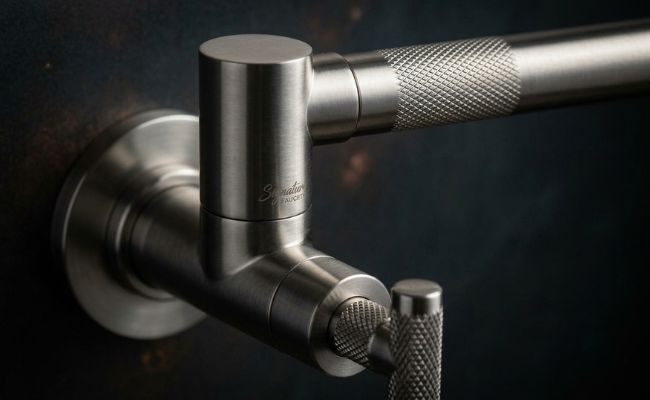
A pot filler is a second water source built for filling deep pots and stockpots, and it comes in two forms that most articles lump together. The classic version is a wall-mounted swing arm installed above the cooktop, fed by its own cold water line, with jointed segments that fold flat against the wall when it is not in use. The second form sits at the sink instead of the wall: a kitchen faucet with a pull-down sprayer and a separate pot filler arm built into the same base, both drawing from the sink's existing supply. The two solve different problems, and which one is worth it depends on which problem you actually have.
The case for a pot filler
What works
- Fills a heavy stockpot right where you will use it, so you are not carrying gallons of water across the kitchen.
- A dedicated pot filler runs a stronger flow than a standard faucet, so a big pot fills in a fraction of the time.
- Frees up the main sink for prep or cleanup while a pot fills elsewhere.
- Reads as a custom, high-end detail over a range, and buyers often notice it during a walkthrough.
What to watch
- A wall-mounted pot filler only fills. You still carry a full, heavy pot back to the sink to drain or empty it.
- Sitting above an open flame with no floor drain nearby, a slow leak at the valve can go unnoticed until it has already damaged the wall or the range.
- The jointed arm sits in the kitchen's biggest splatter zone and needs regular wiping to stay presentable.
- The wall-mounted version needs its own cold water line run behind the cooktop, which adds real plumbing work, especially in a remodel rather than new construction.
Where a wall-mounted pot filler earns its keep
A wall-mounted pot filler pays for itself in a kitchen where someone cooks in real volume: stockpots for broth, big batches of pasta water, canning season, a household that entertains often. It also makes sense when the stove sits well away from the sink, since that is exactly the walk it removes. For a household that cooks mostly on one or two burners, rarely fills anything larger than a saucepan, or has a compact kitchen where the sink and stove already sit close together, the classic wall-mounted version is closer to a design flourish than a daily tool. That is a fair trade for some kitchens and not for others, and it is worth deciding before a wall is opened for plumbing.

If you do go wall-mounted: placement and clearance
- Set the height above the cooktopMost installers position the spout roughly 12 to 18 inches above the cooktop surface, high enough to clear a tall stockpot but not so high that it splashes on the way down.
- Center the reach over every burnerThe swing arm needs to reach the back burners as easily as the front ones. Measure the full extension before the wall is closed up, not after.
- Run a dedicated cold water lineA pot filler is typically cold-water only, since the water gets heated on the stove anyway. That line has to be roughed in behind the wall before the drywall goes back up.
- Confirm both shutoffs workA pot filler has a valve at the wall and a second at the spout. Test both before calling the install finished, since a slow drip at either one is the most common complaint.
Keeping it presentable
A wall-mounted pot filler lives directly in the splash zone above a working stove, which means grease and steam settle on it faster than on any other fixture in the kitchen. Wipe the jointed arm down after regular cooking sessions rather than waiting for it to look dull, and give the folding joints an occasional closer look, since that is where residue builds up first and where a slow drip is easiest to miss. A sink-mounted pot filler arm sees less of that stovetop grease simply because of where it sits, though it still benefits from the same wipe-down habit as the rest of the faucet.
Wall-mounted vs. sink-mounted: how they actually compare
| Wall-mounted pot filler | Sink-mounted with a pot filler arm | |
|---|---|---|
| New water line needed | Yes, run behind the cooktop | No, uses the sink's existing supply |
| Where it fills | Directly over the stove | At the sink, alongside the main sprayer |
| Leak risk | Behind an open flame, no floor drain | Over the sink, where a drip is contained |
| Best for | Heavy stove-side cooking, a remodel with wall access | A second spout and a commercial look, no new plumbing |
A sink-mounted alternative: two spouts, one install
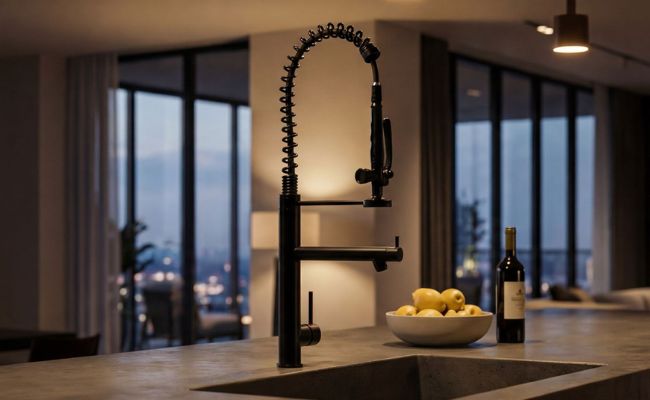
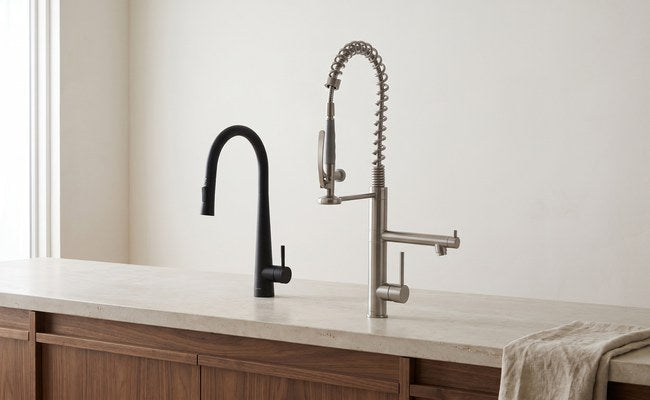
If the wall-mounted version's plumbing and upkeep give you pause but you still like the idea of a second, dedicated spout, a kitchen faucet built with an integrated pot filler arm solves a different problem well. The Klempner Commercial Kitchen Faucet with Pull-Down Sprayer & Pot Filler pairs a spring-coil pull-down sprayer with a separate pot filler arm on the same deck-mounted base, run off two lever handles through a single-hole install. Because it draws from the sink's existing line, there is no new plumbing to open a wall for, and any drip stays over the sink rather than behind the stove. It will not save you the walk from stove to sink the way a wall-mounted unit does, but it gives you a genuine second spout at commercial scale. It comes in brushed nickel, matte black, and chrome.
The Spiro option, for a lighter look
For a kitchen faucet with the same two-spout idea but a lighter overall look, the Spiro Pull-Down Kitchen Faucet with Spring Spout and Pot Filler pairs a flexible pull-down sprayer for everyday rinsing with a dedicated pot filler arm for filling large pots at the sink, run off two lever handles. It is built from solid brass with ceramic disc valving, and it comes in brushed nickel, chrome, and gold. Like the Klempner, it draws from the sink's own water line, so there is nothing new to run behind the stove.

Which one fits your kitchen
If large-volume cooking is a regular part of your week and the stove sits apart from the sink, a wall-mounted pot filler removes real, repeated effort, and many owners say the convenience holds up over time. If you rarely fill anything bigger than a saucepan, or the plumbing and upkeep feel like more commitment than the benefit, a sink-mounted faucet with a built-in pot filler arm gets you most of the everyday usefulness with none of the new water line.
Frequently Asked Questions
What is the downside of a pot filler?
The main downside is that a wall-mounted pot filler only fills a pot; you still carry it, full and heavy, back to the sink to drain or clean it. It also needs its own cold water line and regular cleaning, since it sits in the kitchen's busiest splash zone.
Do pot fillers add value to a home?
Many buyers notice a pot filler as a custom, high-end detail during a showing, and it can support resale value in a kitchen that already reads as upscale. It rarely moves the needle on its own in a more modest kitchen.
Are pot fillers going out of style?
No. They remain a steady feature in higher-end kitchen design, though more shoppers are now weighing a sink-mounted, two-spout faucet alongside the classic wall-mounted version.
Can a pot filler share a water line with my kitchen faucet?
A wall-mounted pot filler needs its own dedicated cold water line run behind the stove. A kitchen faucet built with an integrated pot filler arm skips that entirely, since both spouts draw from the sink's existing supply.
Can I get a pot filler without running new plumbing?
Yes. A kitchen faucet with an integrated pot filler arm, like the Klempner or the Spiro, draws from the sink's existing water line, so there is no new line to run behind the stove.
Is a pot filler only for the stove, or can it work at the sink too?
A pot filler does not have to sit over the stove. A kitchen faucet built with a separate pot filler arm mounts at the sink alongside the main sprayer, so you get a dedicated second spout for filling large pots without touching the wall behind your range.