Article: How Long Do Kitchen Faucets Last, and What Actually Decides It
How Long Do Kitchen Faucets Last, and What Actually Decides It
How long do kitchen faucets last? Most run somewhere between 5 and 20 years, and the range is that wide because two faucets built to the same rough shape can age nothing alike. A faucet with a solid brass body and a ceramic disc valve, kept clear of heavy mineral buildup, routinely runs 15 to 20 years or more. A faucet with a thin body and a basic washer valve in hard water can start dripping within 5. The part that actually decides the number is not the price tag, it is what is inside the faucet and what your water does to it over time. Below is what to check in the kitchen faucets collection before you buy, if you want the faucet you install this year to still be the one you use in year fifteen.
What Actually Decides How Long a Kitchen Faucet Lasts
Seven things determine whether a faucet is still working well in year two or still working well in year twenty. None of them is the brand name on the box.
- Body materialSolid brass resists corrosion and holds its shape for decades. Stainless steel is also durable and will not rust. Thinner zinc alloy bodies flex and crack sooner, especially where the spout meets the base.
- Valve or cartridge typeHow long do kitchen faucet cartridges last? Longer than almost anything else on the faucet, if it uses a ceramic disc valve: two hardened ceramic discs slide against each other and typically outlast the rest of the faucet. Older washer style valves wear down faster and are the classic cause of a slow drip.
- Water hardnessHard water leaves calcium and mineral deposits inside valves, aerators, and spray heads. Over years that buildup is what actually damages the moving parts, not simple old age.
- Daily use and household sizeA faucet in a busy family kitchen gets turned on, off, and pulled down far more times a day than a faucet used only occasionally. More cycles on the handle and the sprayer dock mean the mechanical parts wear sooner.
- FinishThe finish protects the metal underneath but does not extend the valve's life on its own. Gentle cleaning keeps it looking its best, and a scratched finish is a cosmetic problem long before it is a functional one.
- Electronics, if the faucet has themA touch faucet adds a sensor and a battery box to the parts list. The sensor itself is solid state and durable, but batteries need periodic replacement, and electronics typically carry a shorter coverage window than the faucet's mechanical parts.
- What the warranty actually coversA maker that backs its cartridges, hoses, and handles for 5 years is telling you something about how long it expects those parts to hold up. Read what is covered, not just the headline number.
Besas spec sheet
- Body material
- Solid brass
- Valve type
- Ceramic disc
- Flow rate
- 1.8 GPM at 60 PSI
- Certifications
- CE
- Warranty
- 5 years on parts
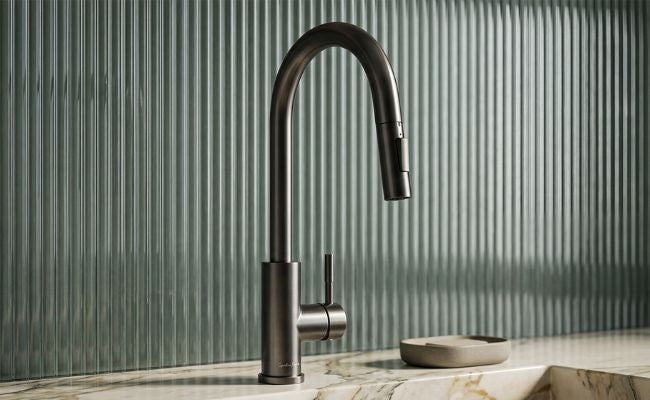
The specs behind the 'best material for a long lasting kitchen faucet' answer: brass body, ceramic disc valve.
How Often Should You Replace a Kitchen Faucet?
There is no fixed replacement schedule, and treating one as gospel leads to either replacing a perfectly good faucet early or ignoring a real problem too long. The better question is whether the faucet is still doing its job. If it holds water pressure, does not drip, and the finish is not flaking, age alone is not a reason to swap it out. If a covered part fails while the faucet is still under warranty, the fix is a replacement part, not a new faucet. Kitchen remodels are the other common trigger, and that is a style decision rather than a durability one, so it is fine to replace a faucet that still works if it no longer fits the room.
Three Kitchen Faucets, Compared on the Numbers That Matter
| Model | Body material | Valve type | Activation | Warranty, parts / electronics |
|---|---|---|---|---|
| Besas | Solid brass | Ceramic disc | Manual lever | 5 years / not applicable |
| Imperium | Stainless steel | Ceramic disc | Touch, capacitive sensor | 5 years / 2 years |
| Klempner | Stainless steel | Ceramic disc | Manual lever, dual outlet | 5 years / not applicable |
Solid Brass vs. Stainless Steel: Which Body Lasts Longer?
Both hold up well when the finish is intact. The Besas uses a solid brass body, the traditional choice for a faucet meant to outlast a remodel, paired with a ceramic disc valve and a 5 year warranty on parts. Stainless steel, used in the Klempner commercial-style faucet, will not rust and holds up equally well in a heavy-use kitchen. The real difference between the two metals is weight and cost, not longevity, as long as the valve inside is the same ceramic disc type.
Is a solid brass body worth paying more for?
What works
- Resists corrosion and holds its shape for decades
- Threads and mounting hardware tend to stay tight longer
- The traditional choice for a faucet meant to outlast a remodel
What to watch
- Costs more upfront than a thinner-bodied faucet
- Heavier, which can add a few minutes to installation
Does a Touch Faucet Last as Long as a Manual One?
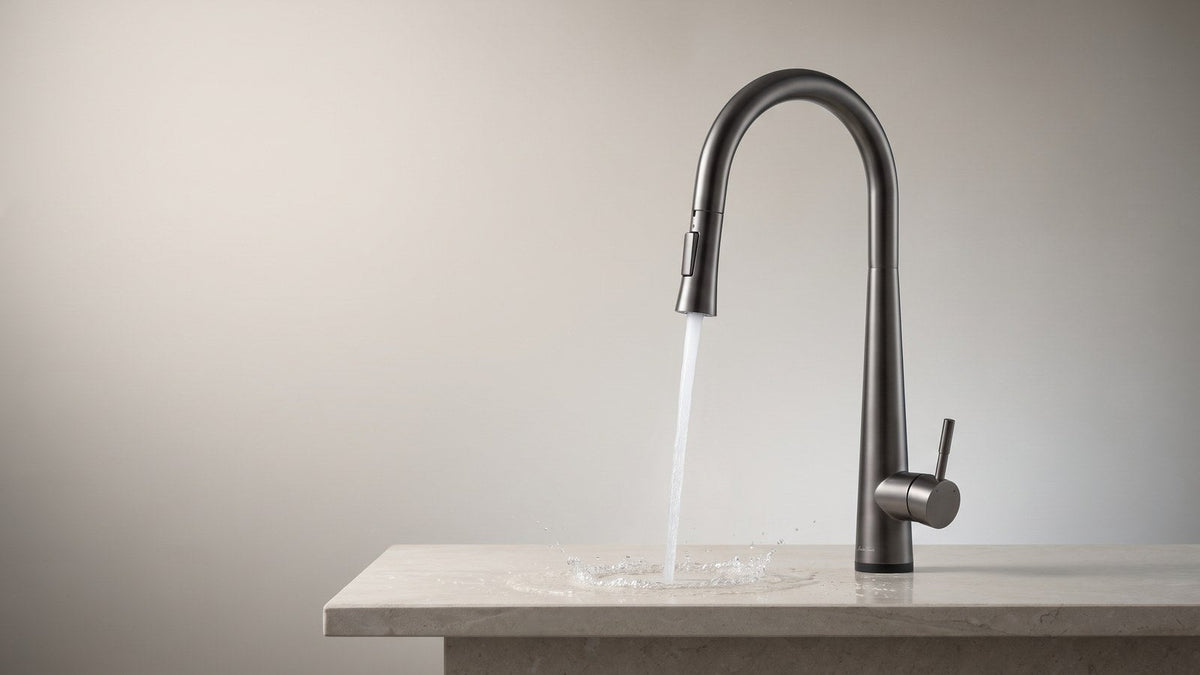
The mechanical side of a touch faucet like the Imperium is the same gooseneck body and pull-down sprayer as a manual model, and it runs at the same 1.8 GPM at 60 PSI most kitchen faucets are built to. What changes is the capacitive touch sensor and its battery box, which is why Signature Faucets covers electronic components for 2 years, separate from the 5 year coverage on the faucet's parts. Batteries themselves are never covered by any faucet warranty. On the compliance side, Imperium carries cUPC, ASME A112.18.1M, NSF/ANSI 61, and NSF/ANSI 372 or California AB1953 certification, the standards that back up a faucet's build quality claims instead of just a marketing line.

What About Commercial-Style Faucets Like the Klempner?
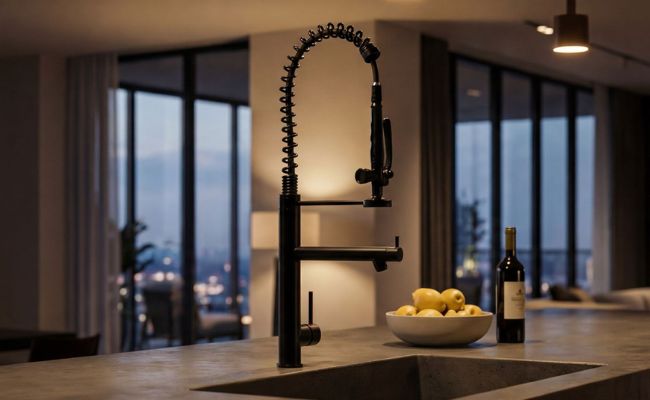
A commercial-style faucet's spring coil and extra pot filler arm are additional moving parts, so it is fair to ask whether that means more to eventually wear out. In practice, the Klempner uses the same ceramic disc valve as a standard single-function faucet and is CE certified, so the coil and pot filler arm add convenience and reach, not a shorter expected lifespan. The stainless steel body and the 5 year parts warranty match Signature Faucets' standard coverage.

Signs Your Kitchen Faucet Needs Replacing, Not Just a New Cartridge
A faucet nearing the end of its useful life tends to show more than one of these at once. Any single symptom on its own is often a simple, cheap fix.
A single drip after years of dry use usually means one worn cartridge or O-ring, an inexpensive part swap. A faucet that goes back to dripping within a few months of that same repair is telling you the valve seat or the body itself has worn past the point a new cartridge can fix. Mineral crust that survives a vinegar soak has usually worked its way past the aerator and into the valve, which is a harder repair than a cosmetic one. None of these signs are urgent on their own, but two or more together are the point where a repair estimate is worth comparing against the cost of a new faucet.
How to Get More Years Out of the Faucet You Already Have
The maintenance that actually extends a kitchen faucet's life is unglamorous and takes minutes a month. Wipe the finish with a soft cloth and mild soap, never an abrasive pad or a cleaner with alcohol or ammonia, both of which can dull a faucet finish over time. Unscrew and rinse the aerator every few months in hard water areas, since that is where mineral buildup shows up first and is easiest to clear before it spreads to the valve. Do not force a stiff handle. A handle that has gone from smooth to stiff is usually telling you the cartridge needs attention, and forcing it can crack the housing around it. None of this is difficult, it is just the kind of five minute task that is easy to skip until the faucet is already showing wear.
Frequently Asked Questions
What is the average lifespan of a kitchen faucet cartridge?
A ceramic disc cartridge typically lasts for many years of normal use and is usually the last part to fail, well after hoses or spray heads show wear. Hard water is the main thing that shortens it.
Does a longer warranty always mean a longer-lasting faucet?
Not automatically, but it is a useful signal. A 5 year warranty on parts means the maker expects the cartridge, handle, and hoses to hold up that long under normal residential use.
Do touch and sensor kitchen faucets wear out faster than manual ones?
The faucet body and valve wear the same way either type does. The added sensor and battery box carry their own shorter coverage window, typically 2 years, separate from the mechanical parts.
Can hard water shorten a kitchen faucet lifespan?
Yes. Mineral deposits from hard water build up inside valves, aerators, and spray heads, and that buildup is one of the most common reasons a faucet starts sticking or dripping years before it should.
What part of a kitchen faucet usually fails first?
The spray hose and the pull-down sprayer head typically show wear before the valve does, since they flex and dock the most times per day of any part on the faucet.