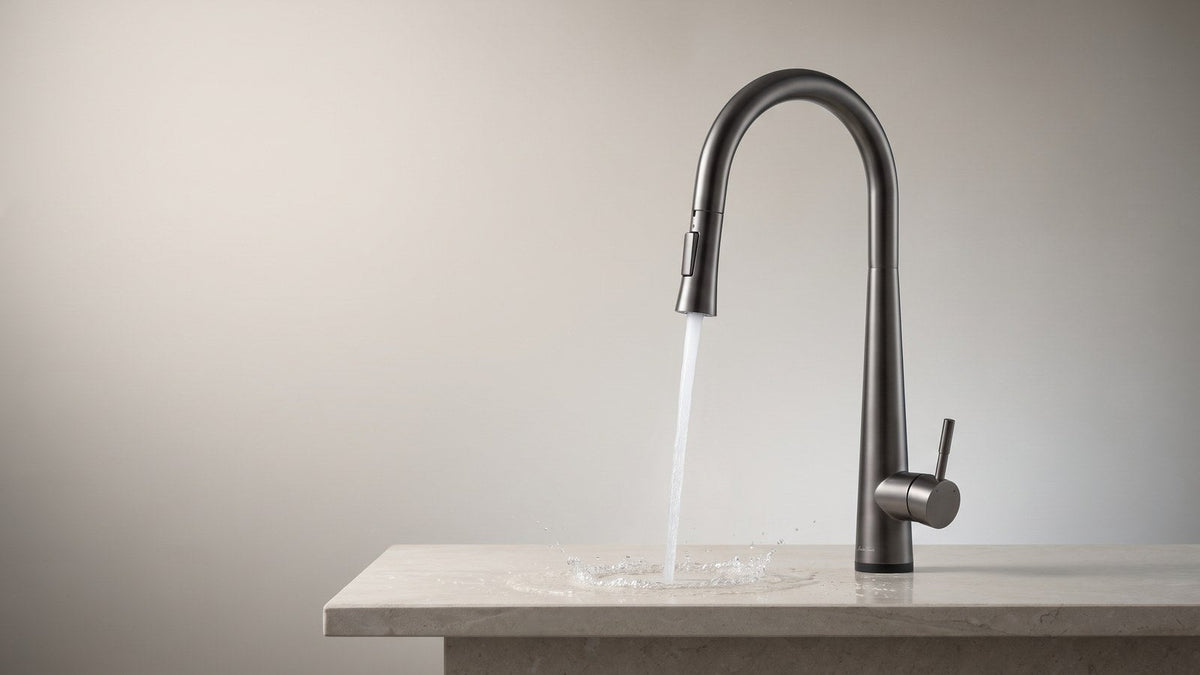
Automatic Kitchen Faucet: How to Choose the Right One
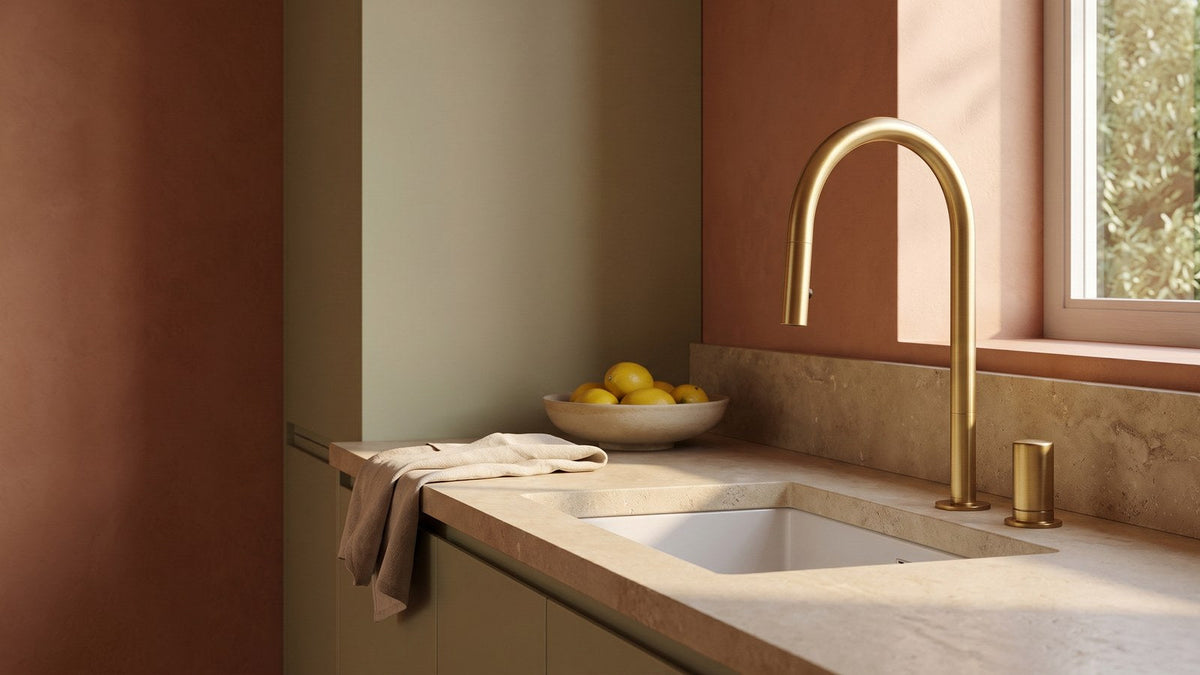
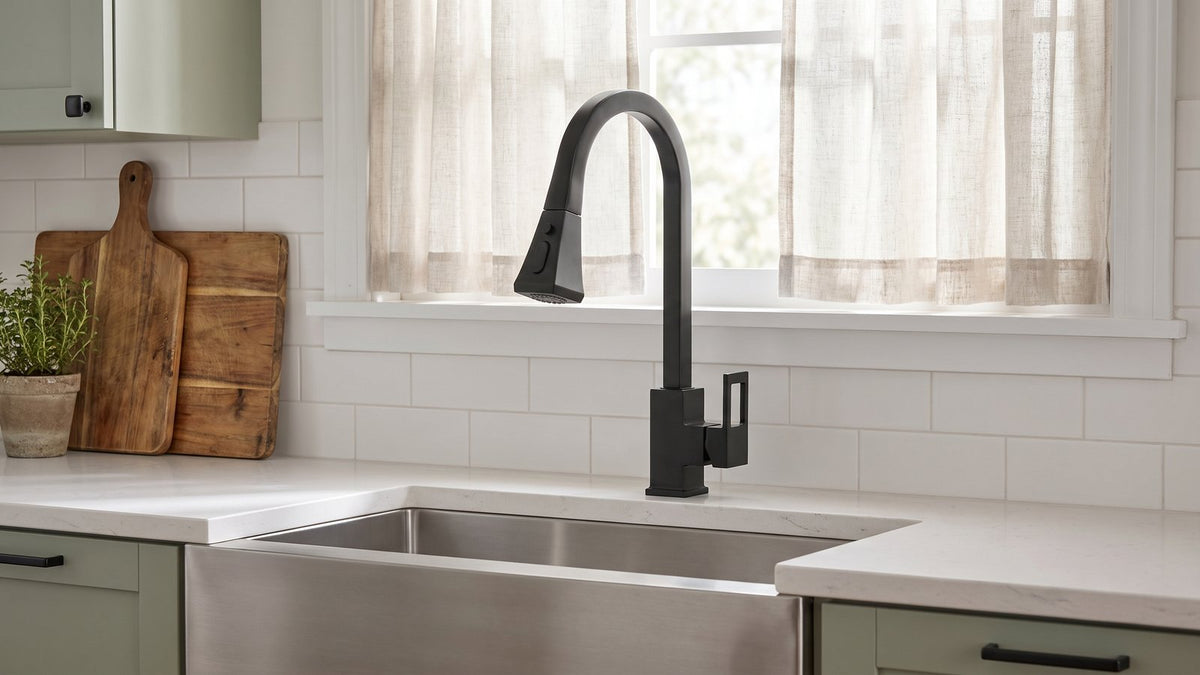
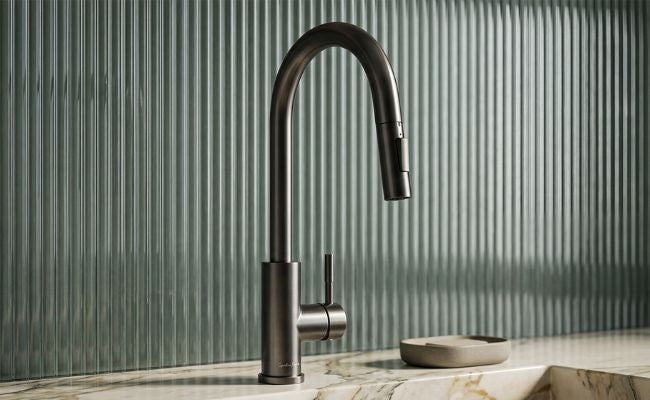
An automatic kitchen faucet is worth buying for one reason above all others: it lets you start water with the back of a wrist, a knuckle or a forearm when your hands are covered in raw chicken, bread dough or potting soil. That is the whole case. Everything else, the sensor technology, the battery box, the docking magnet, is detail underneath it. This guide covers what automatic actually means on a kitchen faucet, the five things that decide whether you will be glad you bought one, and how our two touch models, the Imperium Touch Kitchen Faucet and the Arcus Touch Kitchen Faucet, differ from each other in the numbers that matter at the sink.
In short
- Automatic activation on our kitchen faucets is capacitive touch, not motion sensing. You make contact; you do not wave.
- Touch controls the on and off. The lever still controls hot, cold and how hard the water runs.
- Both touch models are single hole installations, so a three hole sink needs a deck plate you buy separately.
- Power comes from a battery box under the sink. Plan for where it mounts before you commit.
- Every touch faucet we build has a manual fallback — disconnect the sensor box and it runs from the lever alone — so a dead battery is an inconvenience, not a failure.
What automatic actually means on a kitchen faucet
The word automatic covers two genuinely different technologies, and the difference matters at the sink. Motion activation uses an infrared sensor that fires when something crosses a beam, which is what you find in an airport restroom. Touch activation uses a capacitive sensor that fires when skin makes contact with the metal, the same principle a phone screen uses. Signature Faucets builds touch, not motion. Both the Imperium and the Arcus carry a capacitive sensor.
That choice has a practical consequence people notice within a week of installing one. A motion faucet fires when a sleeve, a dish towel or a passing cat crosses the beam. A touch faucet does not, because it needs actual contact. The tradeoff is that a touch faucet cannot be operated with a truly clean, dry-hands-only approach; you have to bump it with something. In a kitchen, where the hands you want to keep off the handle are usually wet or greasy rather than sterile, most people find contact activation the more predictable of the two.

Five questions to answer before you buy
Work through these in order. The first two eliminate more faucets than the other three combined, so answering them first saves you reading specification sheets for models that were never going to fit.
The decision sequence
- How many holes does your sink or countertop already have?Both of our touch models install in a single hole. If your existing sink is drilled for three, you are not blocked, but you will need a deck plate to cover the outer two, and neither model includes one in the box. Measure before you shop, because this is the question most likely to change what you can buy.
- How much clearance is above the sink?A high arc spout is easier to fill stockpots under and harder to fit beneath a window that opens inward or a low cabinet. Measure from the deck of the sink to the obstruction and compare that against the overall height, not the spout height, because the highest point of the faucet is what will hit the window sash.
- Where will the battery box live?The touch electronics run from a battery box that mounts under the sink. Look at what is already down there. A pull out trash unit, a water filter or a garbage disposal can leave less usable wall than you expect, and you want the box reachable without emptying the cabinet.
- Do you actually pull the sprayer down, or do you spray in place?A pull down sprayer that retracts crisply is worth more day to day than a longer hose you never fully extend. Ask how the head returns to the spout, because a head that sags out of the dock a quarter inch is a thing you will look at every day for a decade.
- What is the water like where you live?Hard water leaves mineral deposits on the spray face and around the sensor contact area. It does not stop a touch faucet from working, but it does mean the finish and the spray head need wiping more often than they would in a soft water region. Choose a finish you are willing to maintain.
Power is the part most buyers overlook
A touch faucet needs a small, steady current to keep the capacitive sensor listening. On our models that comes from a battery box that mounts under the sink and holds four AA batteries, which are not supplied in the box. This is not a flaw so much as a design decision with consequences: it means no electrician, no outlet under the sink, and no dependence on household power, and it also means a component you will service occasionally.
The reassurance worth stating plainly: a dead set of batteries never leaves you without water. Swap them and touch activation returns, or disconnect the sensor box under the sink and the faucet runs fully manual from the lever, exactly as it would on a faucet with no electronics at all.
Reach, height and what sits underneath
Spout height tells you what fits under the faucet. Spout reach tells you how far into the bowl the water lands, which decides whether you are rinsing over the drain or over the edge of the sink. Overall height is the number that matters for windows and cabinets, because it includes the part of the faucet above the spout outlet. Our two touch models are close on reach and apart on height, and that single difference is what separates them for most buyers.
| Imperium Touch | Arcus Touch | |
|---|---|---|
| Activation | Capacitive touch | Capacitive touch |
| Spout height | 8 inches | 9.25 inches |
| Spout reach | 8.625 inches | 8.625 inches |
| Overall height | 16.375 inches | 17.75 inches |
| Spray hose length | 63 inches | 63 inches |
| Spout swivel | 360 degrees | 360 degrees |
| Max countertop thickness | 1.5 inches | 1.5 inches |
| Installation | Single hole | Single hole |
Read that table as one decision rather than eight. The reach is identical, so both land water in the same place. The Arcus stands taller at every point, which buys clearance for tall pots and costs clearance under a window. If nothing above your sink constrains you, the Arcus gives you more room to work. If something does, measure it and let the number choose.
Imperium or Arcus
Imperium Touch Kitchen Faucet
The Imperium is the shorter of the two, which is what keeps it under low mounted cabinets and window sashes. It is the model to choose when the space above your sink is genuinely tight, and it is the one of the two whose flow rate is published on its own specification, at 1.8 GPM at 60 PSI. The spray head is stainless steel, and the head returns to the spout on a magnetic dock backed by a gravity ball on the hose, so it seats rather than sags.

Imperium Touch, key numbers
- Activation
- Capacitive touch
- Flow rate
- 1.8 GPM at 60 PSI
- Spout height
- 8 inches
- Spout reach
- 8.625 inches
- Overall height
- 16.375 inches
- Spray hose
- 63 inches
- Body material
- Stainless steel
- Installation
- Single hole
Deck plate not included. A single hole installation in a three hole sink needs one.

Arcus Touch Kitchen Faucet
The Arcus is the taller sibling. It runs a ceramic disc valve, the type that resists drip better than a rubber washer over the long run, and its spout is styled as a high arc gooseneck. Reach is the same as the Imperium, so the water still lands where you want it; you are buying the extra working height above the bowl and the clearance to fill a stockpot without tilting it.
Arcus Touch, key numbers
- Activation
- Capacitive touch
- Valve type
- Ceramic disc
- Spout height
- 9.25 inches
- Spout reach
- 8.625 inches
- Overall height
- 17.75 inches
- Spray hose
- 63 inches
- Body material
- Stainless steel
- Installation
- Single hole
Deck plate not included. Supply lines measure 27.56 inches.

Is a touch faucet worth it
The honest version, from people who own them: the convenience is real and it is smaller than the marketing suggests, and the reliability worry is real and smaller than the internet suggests. Here is the balance.
Touch activation, weighed
What works
- Starts water with a wrist or forearm when your hands are contaminated, which is the daily win.
- Cuts the water off between rinses without a handle movement, so less runs down the drain.
- Keeps the handle cleaner, because you touch it deliberately rather than with whatever is on your hands.
- Falls back to full manual lever operation when the sensor box is disconnected, so the electronics are an addition rather than a dependency.
What to watch
- Adds a battery box under the sink that needs mounting space and occasional service.
- Requires contact, so it will not work for the genuinely hands-free case a motion faucet covers.
- Adds a sensor and a control module, which is more to go wrong than a purely mechanical faucet has.
- Registers accidental taps, so a pan set against the spout can start the water.
What installation actually involves
A touch faucet installs like any other single hole faucet with one extra step. The shank drops through the hole, the mounting nut tightens from underneath, the hot and cold supply lines connect, and then the sensor lead runs to the battery box and the box mounts to the cabinet wall. Most of the difficulty is not skill, it is access: the work happens lying on your back inside a cabinet with a basin wrench. If your shut off valves are old, seized or weeping, replace them while everything is already apart. That is the part of the job people regret skipping.
One measurement to check before you start, because it is the one that stops an install cold: our touch models mount through a countertop up to 1.5 inches thick. A thicker stone slab needs a mounting solution the standard hardware does not cover.
Frequently Asked Questions
Does an automatic kitchen faucet still work if the batteries die?
Yes, once you switch it to manual. While the sensor is connected, touch is what starts and stops the water, so with dead batteries the faucet will not respond from the lever alone. The fix takes a minute: swap the batteries and touch activation returns, or disconnect the sensor box under the sink and the faucet runs fully manual — the lever then works exactly like a standard faucet. Either way, a dead battery never leaves you without water.
Can I install a single hole touch faucet in a sink drilled for three holes?
Yes, with a deck plate that covers the outer two holes. Neither of our touch models includes a deck plate in the box, so order one alongside the faucet if your sink has three holes.
Where does the battery box go?
It mounts to the cabinet wall under the sink and connects to the faucet by a lead. Choose a spot you can reach without emptying the cabinet, and mount it before you connect the supply lines rather than after.
Does hard water affect the touch sensor?
Hard water leaves mineral deposits on the spray face and around the contact area, the same as it does on any faucet. It does not damage the capacitive sensor. Wiping the spout and spray head down regularly keeps both the finish and the touch response consistent.
Does the spray head stay docked, or does it sag out over time?
Both models return the head with a magnetic dock and a gravity ball weighted on the hose, so the head is pulled square into the spout rather than held by friction alone. That combination is what stops the slow droop that older spring loaded sprayers develop.
Where to go next
If a touch model is right for your sink, compare the two above on the one number your space constrains, usually overall height, and buy the one that clears it. If you are still deciding whether automatic activation is for you at all, browse the full kitchen faucet collection and look at the manual pull down models alongside them. The lever, the spout and the spray head are the parts you interact with a hundred times a week; touch is the part you will notice on the days your hands are a mess.