2 Hole Kitchen Faucet Buying Guide: Count Your Holes First
A 2 hole kitchen faucet is a faucet that needs exactly two openings in your sink or countertop to install. One hole carries the spout, the second carries the handle or an accessory such as a soap dispenser. If you count two holes behind your current faucet, this is the configuration you are shopping for, and buying a single hole model instead will leave you with an empty hole to cover.
Most kitchen faucets sold today are single hole. That makes a two hole sink feel like the awkward one, and it is the reason people end up on this page counting holes with a flashlight. The good news is that the fix is simple once you know what you are looking at.
How to count your sink holes before you buy anything
Do this before you look at a single product. Clear out the cabinet, get under the sink with a light, and count the openings drilled through the sink deck or countertop. Include holes that are currently hidden under a base plate, because a wide escutcheon can disguise three holes as one.
- Count from underneath, not from above. A deck plate sits on top and hides everything under it. From below you see the truth.
- Note what occupies each hole today. Spout, handle, side sprayer, soap dispenser, air gap for a dishwasher, filtered water spout.
- Measure the spacing between hole centers. Two holes drilled a few inches apart behave differently from two holes at opposite ends of the sink.
- Check the hole diameter. Standard kitchen sink holes are cut for common faucet shanks, but an older or imported sink can differ.
- Decide what you want the second hole to do. This is the real decision, and it is covered below.

What the second hole is actually for
Two hole faucets split into two families, and they are not interchangeable.
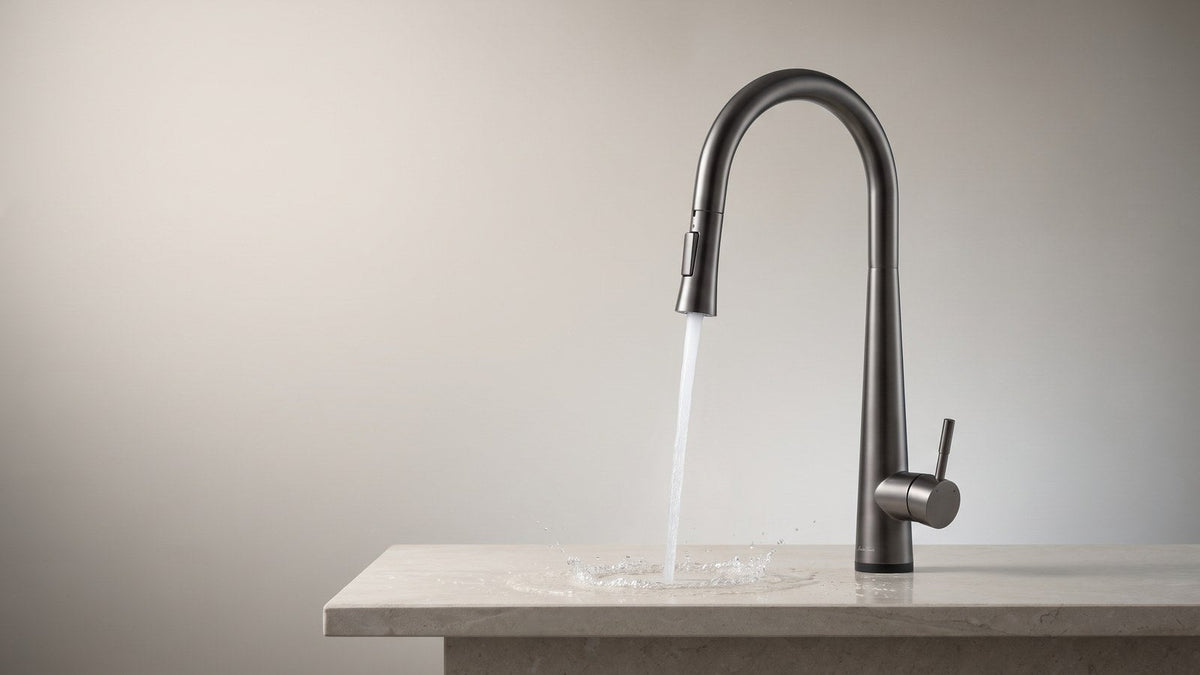
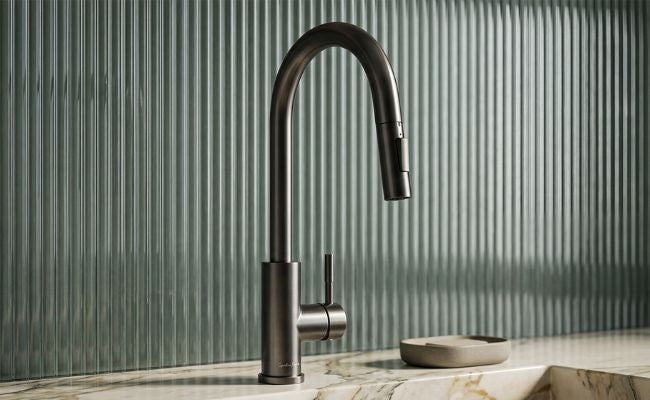
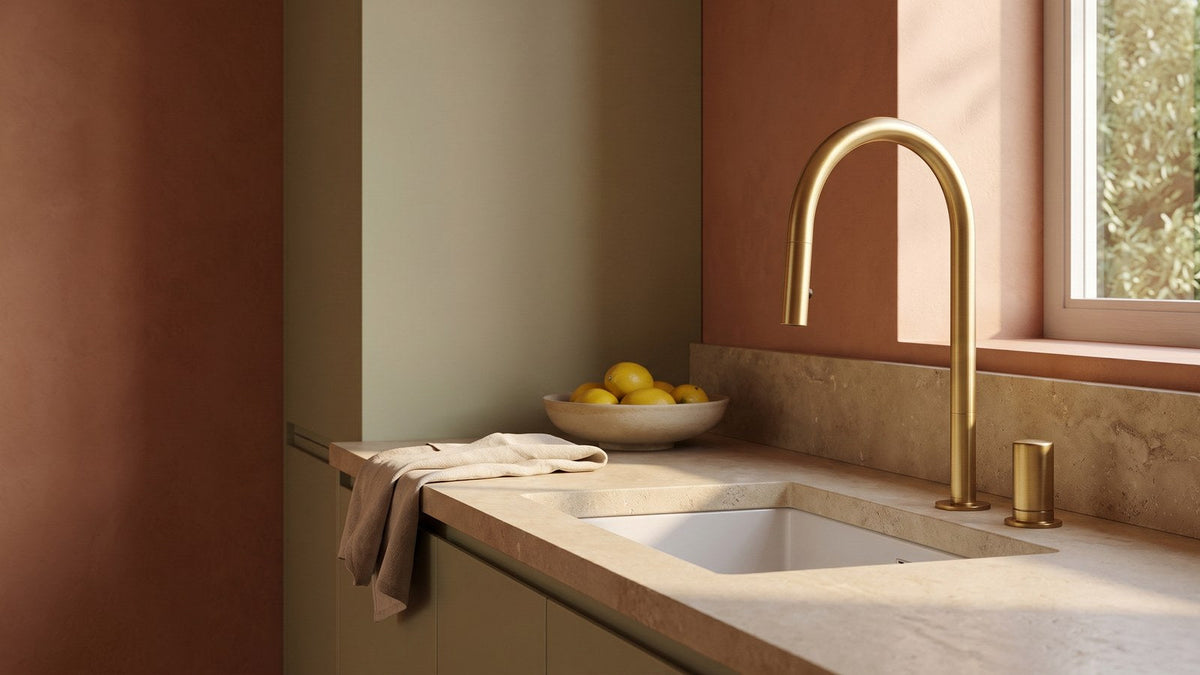
Spout and handle separated. The spout occupies one hole and the control lever occupies the other. The look is cleaner and more deliberate than a single hole faucet, because the handle is not crowded against the spout body. Our Cale two hole kitchen faucet is built this way, with one lever handle and a gooseneck high arc spout.
Faucet plus an accessory. The faucet body takes one hole and the second hole carries a soap dispenser, a side sprayer, or a filtered water spout. This is the more common arrangement on older American sinks, where a side sprayer came as standard.
Work out which family you are in before you shop, because a faucet designed for a separated handle will not fill a hole that was drilled for a side sprayer at the far edge of the sink.
The five things that decide which two hole faucet fits
1. Hole spacing
Two holes drilled close together suit a faucet with a separated lever handle. Two holes drilled far apart, typically at the outer edge of the sink deck, suit a faucet plus accessory setup. Measure center to center and compare that number against the product's installation requirements before ordering.
2. Spout style and reach
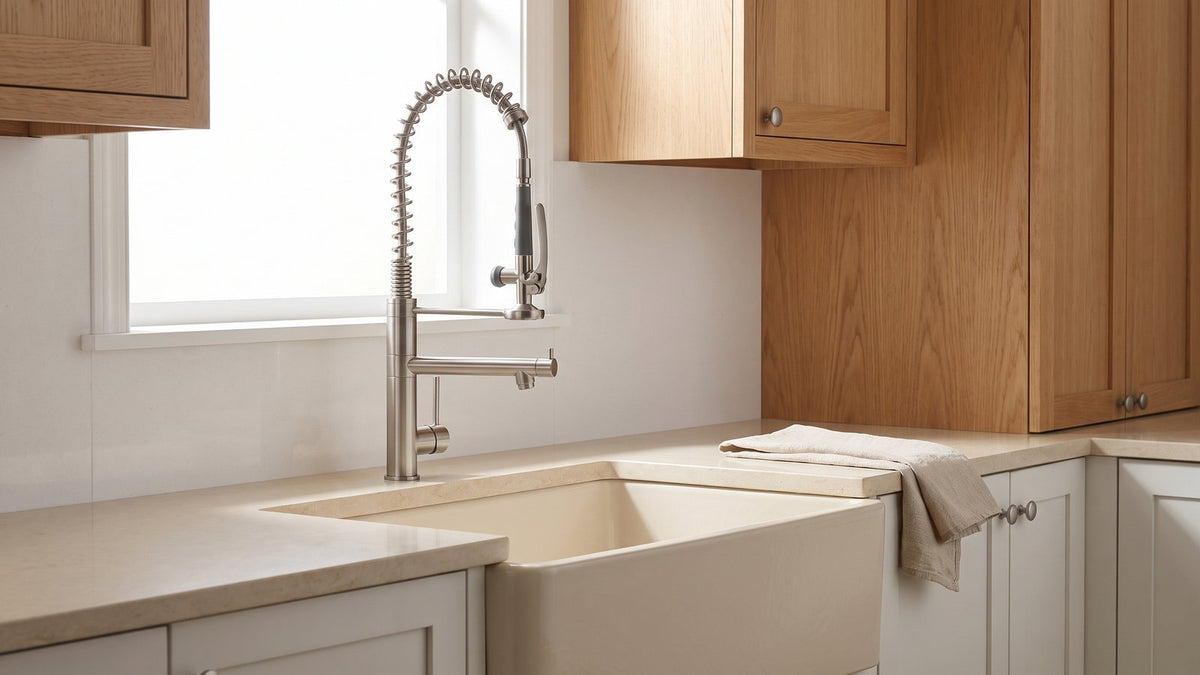
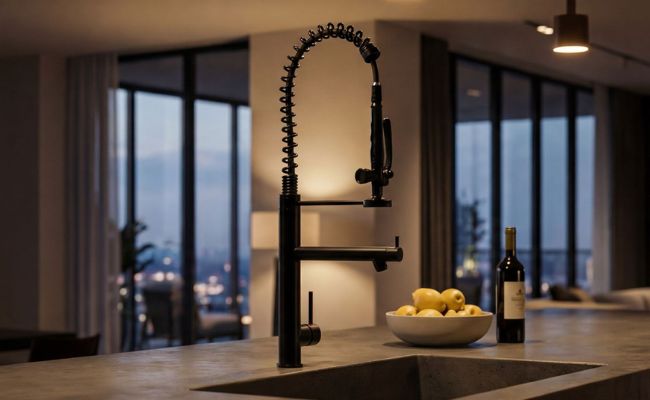
A high arc gooseneck spout gives you clearance to fill a stockpot and rinse a sheet pan. A lower profile spout suits a sink under a window where a tall faucet would foul the sash. Both Cale and our Dux two hole kitchen faucet use a high arc profile, so measure the space above your sink before committing to either.

3. Whether you need a pull-down sprayer
A pull-down spray head is genuinely useful for rinsing a deep sink and cleaning the basin itself. Cale carries a pull-down spout with a push button spray control. Dux uses a fixed standard spout with a 360 degree swivel instead, which suits a household that washes more than it rinses, and which has one fewer moving part to maintain.
4. Handle count
Two holes does not automatically mean two handles. Both Cale and Dux are single handle faucets, which means one lever controls temperature and flow together. If you specifically want separate hot and cold controls, that is a three hole widespread setup rather than a two hole one.
5. Finish, and whether it will still match in five years
Finish is the decision people regret most, because it is the one you look at every day. Cale is available in brushed gold, gunmetal gray, matte black, chrome and brushed nickel. Dux is available in gold, brushed gold, chrome and matte black. Chrome and brushed nickel are the safest matches for existing stainless appliances. Matte black and gunmetal read as deliberate design choices and pair better with a dark or two tone kitchen than with a builder grade one.
One practical note on darker finishes: they show water spotting more readily than chrome in a hard water area, so they ask for a wipe down rather than tolerating neglect.
What about the hole you are not using?
This is the question behind most two hole searches. If your sink has three holes and you have fallen for a two hole faucet, you have two honest options.
The first is a deck plate, sometimes called an escutcheon, which spans the extra holes and gives a single clean base. Note that neither Cale nor Dux includes a deck plate in the box, so buy one to match your finish if you need it.
The second is to fill the spare hole with something useful. A soap dispenser is the obvious choice and turns an inconvenience into a feature. A filtered water spout or an air gap for the dishwasher are the other common answers.
What you should not do is leave an open hole. Water finds it, gets under the deck, and works on your cabinet where you cannot see it.
Materials and what they mean day to day
Both models covered here use solid brass bodies. Brass matters for two reasons that show up over years rather than weeks: it resists corrosion in the wet environment under and around a sink, and it gives the faucet enough weight that the handle feels controlled rather than flimsy. A light faucet is usually a thin walled one.
Both are deck mounted, meaning they fix through the sink or countertop rather than the wall. Wall mounted kitchen faucets exist but are a plumbing decision rather than a shopping one, because they require the supply lines to run up inside the wall.
Installation, honestly
A like for like swap in an existing two hole sink is a realistic weekend job for a confident DIYer. Shut off the supplies, disconnect the old unit, drop the new one through the same holes, connect the flexible supply lines, and run the water while checking for weeping at every joint.
Call a plumber if any of the following apply: you are changing the hole configuration, the shut off valves under the sink are seized or absent, the existing faucet is corroded into place, or you are working on a stone countertop where drilling is involved. Stone is unforgiving and a cracked slab costs more than the faucet.
So which one should you buy?
If you want the pull-down sprayer and the widest choice of finishes, Cale is the more versatile of the two. If you want the simplest possible mechanism and a fixed spout that swivels out of the way, Dux is the cleaner answer. Both install in two holes, both use a single lever, and both are solid brass.
If counting your holes turned up one rather than two, the fix is easy, because most of our range is single hole. Browse the full kitchen faucet collection and filter from there.
Frequently Asked Questions
What is the difference between a 2 hole and a single hole kitchen faucet?
A single hole faucet puts the spout and the handle through one opening in the sink. A 2 hole faucet needs two openings, using the second one for a separated handle or an accessory such as a soap dispenser. The difference is about how your sink is drilled, not about performance.
Can I put a 2 hole kitchen faucet in a 3 hole sink?
Yes, provided you cover or use the third hole. A deck plate spans the extra opening and gives you one clean base, or you can fit a soap dispenser or filtered water spout in it. Leaving a hole open lets water reach the cabinet below.
Does a 2 hole faucet mean it has two handles?
No. Hole count and handle count are separate things. Both of the two hole kitchen faucets in this guide use a single lever that controls temperature and flow together. Separate hot and cold handles usually indicate a three hole widespread configuration.
How do I measure the spacing between my sink holes?
Measure from the center of one hole to the center of the next, in inches, working from underneath the sink where nothing is hidden by a base plate. Write the number down before you shop, because it decides which faucets will physically fit.
Shop two hole kitchen faucets