
Article: Kitchen Faucet Tap to Turn On: How It Works and What to Check Before You Buy
Kitchen Faucet Tap to Turn On: How It Works and What to Check Before You Buy
Every faucet in this guide comes from our touch kitchen faucet collection, where all the current models share the same capacitive sensor, a single hole install, and a battery powered control box, so the real differences between them come down to spout style, reach, and finish.
In short
- Tap to turn on means a capacitive touch sensor, not a motion sensor; the handle still sets temperature.
- Both faucets in this guide run on four AA batteries and still work manually if the sensor fails.
- Check your sink's hole count first: both models here install through a single hole.
- A touch faucet costs more than a manual one but installs the same way, no wiring required.
Why People Switch to a Touch Faucet
The most common reason is mid-task hands. Raw chicken, bread dough, a fistful of dirt from a potted herb, greasy dish suds: all of these make a lever handle something you would rather not touch, and a capacitive sensor lets you start and stop water with a knuckle, wrist, or forearm instead. The second reason is speed. A tap is faster than reaching for a handle, turning it, and returning it to the same temperature setting every time, since the handle stays where you left it and the sensor only toggles flow. Neither faucet in this guide changes how temperature is set. You still dial that in with the handle once, the way you would on a manual faucet, and the sensor only takes over starting and stopping the flow.
5 Things to Check Before You Buy a Tap-to-Turn-On Kitchen Faucet
- Sensor type and where it is activeConfirm the sensor is capacitive, meaning it responds to contact rather than motion, and check how much of the faucet responds to a tap. On the Arcus and Imperium below, the sensor covers the whole metal spout and body, so any part of your hand, wrist, or forearm works, not just one marked spot.
- Battery power and what happens when it runs lowThe control box on a touch faucet runs on batteries, four AA cells on both faucets in this guide, and the batteries are not included in the box. Ask how the faucet signals a low battery before you are caught mid rinse with no sensor response.
- Manual overrideA touch faucet should still work as a standard faucet from the handle even if the sensor or the batteries fail. Both faucets here keep that manual path, so a dead battery slows you down rather than cutting off your water.
- Installation holesCount your sink existing holes before you shop. Both the Arcus and the Imperium install through a single hole, so a 3 hole or widespread cutout needs a deck plate or a different model, and that is worth checking before the faucet arrives, not after.
- Finish and warranty coverageThe sensor does not change how a finish is cared for day to day. Match the finish to your other fixtures, and confirm the warranty covers the electronic parts and not only the plumbing, since a touch faucet has more components than a fully manual one.
Arcus: Built for a Busy Prep Sink
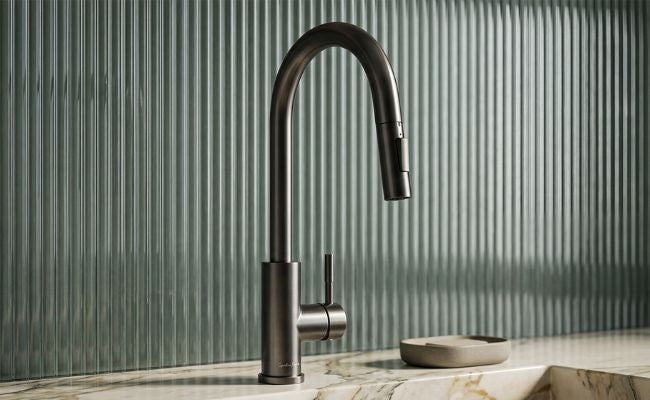
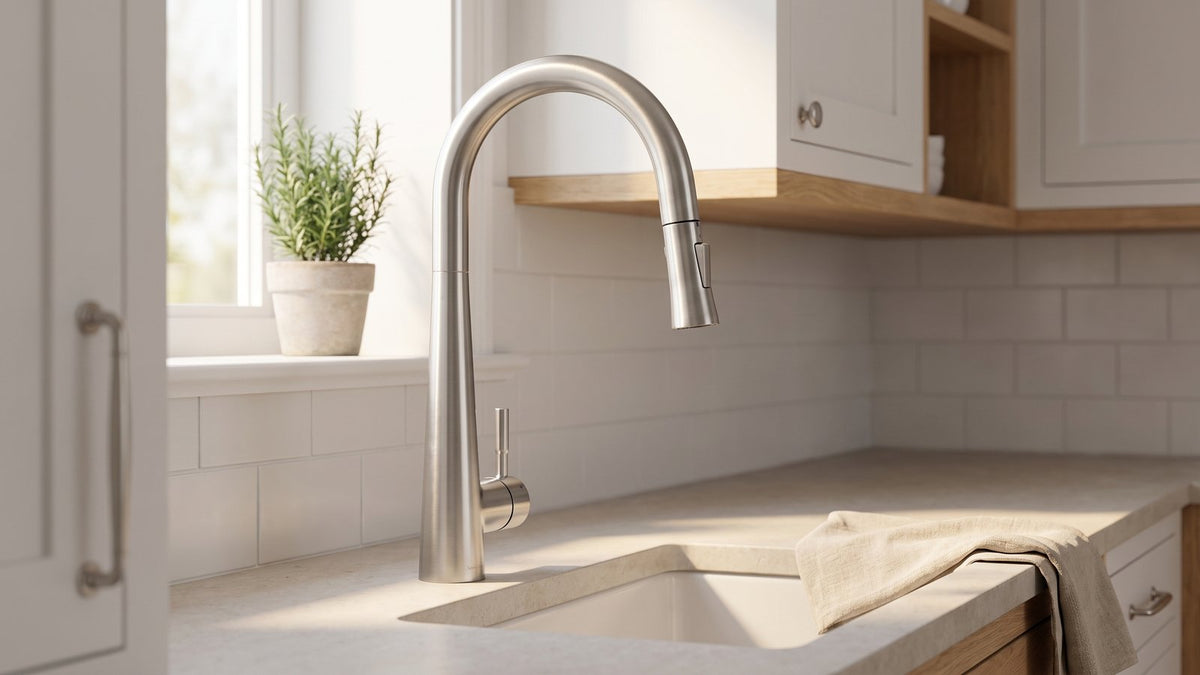
The Arcus Touch Kitchen Faucet pairs the capacitive tap sensor with a pull-down sprayer on a gooseneck, high-arc spout, so it suits a deeper sink where you need reach as much as a hands-free tap. The spray head docks with a gravity ball and a magnetic dock, so it seats itself back in place rather than swinging loose, and the spray switch is a rocker you can find by feel without looking down mid-task. It carries a 5-year warranty and is certified to cUPC, ASME A112.18.1M, NSF/ANSI 61, NSF/ANSI 372, and California AB1953, the certification set that covers plumbing performance, material safety, and lead content limits for a kitchen faucet sold in the United States.
Arcus Touch Kitchen Faucet
- Sensor
- Capacitive touch
- Spout style
- Gooseneck, high-arc
- Docking system
- Gravity ball and magnetic dock
- Supply line length
- 27.56 in
- Spray hose length
- 63 in
- Warranty
- 5 years
Imperium: the Single-Hole Option With Full Swivel Reach

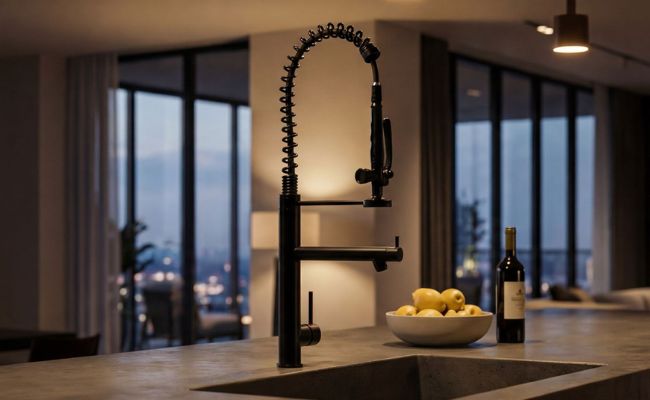
The Imperium Touch Kitchen Faucet uses the same capacitive sensor as the Arcus, in a single-hole install with a 360-degree swivel spout and a stainless steel spray head that switches between a stream and a spray pattern. It carries the same 5-year warranty and the same certification set, cUPC, ASME A112.18.1M, NSF/ANSI 61, and NSF/ANSI 372 with California AB1953, so the choice between the two faucets comes down to spout style, reach, and finish rather than the sensor itself, which behaves identically on both.
Imperium Touch Kitchen Faucet
- Sensor
- Capacitive touch
- Installation
- Single hole
- Spout swivel
- 360 degrees
- Spray head material
- Stainless steel
- Spray modes
- Stream, spray
- Warranty
- 5 years
What the Certifications Actually Cover
The certification list on both faucets is not decoration. cUPC means the faucet has been tested against the Uniform Plumbing Code standard that most US municipalities recognize for permits and inspections. ASME A112.18.1M is the performance standard for the faucet itself, covering things like flow rate and how the fittings hold up under pressure. NSF/ANSI 61 covers material safety for anything the water touches, and NSF/ANSI 372, paired with California AB1953, sets the low lead content limit that applies to faucets sold for drinking water use nationwide, not only in California. A faucet with a sensor added has more parts that could fail these tests than a fully manual one, so seeing the full set on the spec sheet, not just a general safety claim, is worth checking before you buy.
Installation: What Changes With a Touch Sensor
A single-hole touch faucet installs the same way a manual single-hole faucet does at the sink deck: one hole, standard supply lines, a mounting nut underneath. The difference is under the cabinet, where the battery box needs a dry, accessible spot since you will open it to change batteries. Leave enough slack in the supply lines to pull the box forward rather than mounting it wedged in a back corner. Neither faucet in this guide needs household wiring or a dedicated outlet. The whole sensor system runs on the battery box alone, which is part of why a touch faucet is a same-day swap for most kitchens rather than a project that needs an electrician.
Is a Tap-to-Turn-On Kitchen Faucet Worth It?
What works
- Turns water on and off with a bare tap when your hands are full, wet, or covered in raw food or dough
- Still works as a normal faucet from the handle if the sensor or the batteries ever fail
- Installs through a standard single hole with no household wiring required
What to watch
- Needs four AA batteries and a battery box mounted under the sink
- A dish, spray hose, or sponge brushing the body can trigger it by accident
- Costs more upfront than a manual only faucet in the same finish
For a kitchen where you are constantly reaching for the faucet with dirty or full hands, a touch faucet earns its keep quickly, and the manual override means you are never fully dependent on the sensor. If your main goal is avoiding contact with the faucet entirely, for example if you cook with raw poultry often or want a hands-free tap for a young child at the sink, a touchless motion sensor is the closer fit. Our touch vs. touchless comparison walks through that decision, including install cost and everyday hygiene tradeoffs, in more depth than this buying guide covers.
Frequently Asked Questions
What does tap to turn on mean on a kitchen faucet?
It means the faucet uses a capacitive touch sensor built into the metal body, so a light tap anywhere on the spout or handle starts or stops the water without lifting a lever.
Do tap-to-turn-on kitchen faucets need batteries?
Yes. Both the Arcus and the Imperium run their sensor from a battery box that takes four AA batteries, and the batteries are not included with the faucet.
Can I still use the faucet if the sensor stops working?
Yes. Both faucets operate as a standard manual faucet from the handle even if the touch sensor or the batteries are out, so a dead battery slows you down rather than cutting off your water.
Is a touch faucet the same as a touchless faucet?
No. A touch faucet responds to contact with the body, while a touchless faucet uses a motion sensor that responds to a hand nearby without contact.
Is a touch faucet worth it for a busy kitchen?
For most home cooks who need a quick way to start water with full or wet hands, yes, since the manual handle still works as a backup if the sensor ever needs attention.
This guide featured the Arcus Touch Kitchen Faucet and the Imperium Touch Kitchen Faucet, both available in six finishes with the same capacitive sensor and 5-year warranty behind them. If a faucet you already own has stopped responding to a tap, our touch faucet troubleshooting guide covers the checks to run before calling a plumber.

