Pull Down vs Pull Out Faucet: Which One Belongs Over Your Sink?
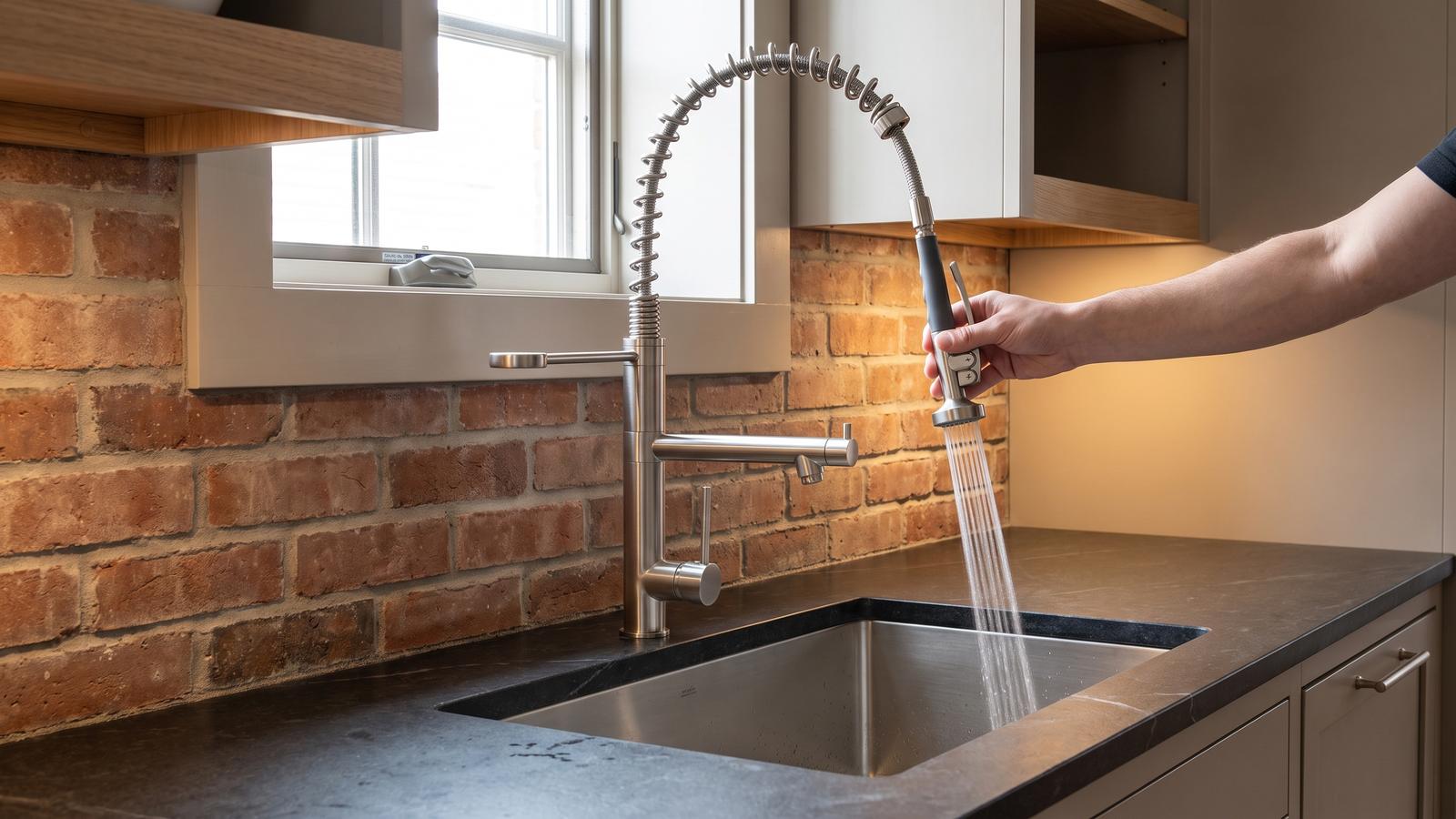
Choosing between a pull down vs pull out faucet comes down to one physical difference: the direction the spray head travels. A pull down faucet has a tall, high arc spout, and its spray head pulls straight down into the sink. A pull out faucet has a lower, more compact spout, and its head pulls outward, toward you, like a handheld wand. For most American kitchens, a pull down faucet is the stronger choice. It fills tall stock pots without tilting them, aims water at the bottom of the basin where rinsing actually happens, and docks back into place in one natural motion. A pull out faucet earns its spot in small kitchens and at sinks under low windows or open shelving, where a tall spout simply will not fit. Here is how the two designs compare, factor by factor.
Pull down vs pull out at a glance
| Factor | Pull down faucet | Pull out faucet |
|---|---|---|
| Spout shape | Tall, high arc gooseneck or open spring coil | Low, compact spout with a longer head |
| Spray head motion | Pulls straight down into the sink | Pulls out and toward you, like a wand |
| Filling tall pots | Superb, pots sit flat under the high arc | Limited by the low spout, though the head can reach a pot on the counter |
| Deep sinks | The natural pairing, water aims straight down | Works, but the head travels at a flatter angle |
| Shallow sinks | Taller water drop can splash more | Gentler angle, typically less splash |
| Clearance needed | Vertical room above the sink | Fits under low windows, shelves, and cabinets |
| Docking | Short drop back to the spout, gravity helps | Longer hose travel back into the spout body |
| Best for | Most kitchens, big cookware, deep basins | Small kitchens, bar sinks, tight overhead space |

The short version:
- The two designs differ in spout height and the direction the spray head moves, not in how the water works.
- Pull down faucets win on pot clearance, aim, and docking, which is why they dominate new kitchen builds.
- Pull out faucets win on overhead clearance and counter-level reach, which keeps them relevant in compact kitchens.
- Sink depth matters: deep basins favor pull down, shallow basins are kinder to pull out heads.
What each design actually is
A pull down faucet is a kitchen faucet with a high arc spout whose spray head docks at the very tip and pulls straight down into the basin. The arc can be a smooth gooseneck curve or an exposed spring coil in the commercial style. Because the head starts high and travels down, the motion mirrors what you naturally do at a sink: point water at dishes below you.
A pull out faucet is a kitchen faucet with a shorter, lower spout whose spray head is the front section of the spout itself. You grip the head and pull it out horizontally, toward you. The head is usually longer in your hand, closer to a handheld sprayer, and the hose tends to give you more lateral range across the counter.
Neither design changes the water itself. Spray modes, flow, and temperature control behave the same way in both. You are choosing a geometry, not a plumbing system.
Height, reach, and pot clearance
Pot clearance is the single biggest practical difference between these two designs. A high arc pull down spout leaves open space under the curve, so a tall stock pot or pasta pot sits flat in the sink while it fills. With a low pull out spout, that same pot has to be angled in, or filled on the counter with the head extended.
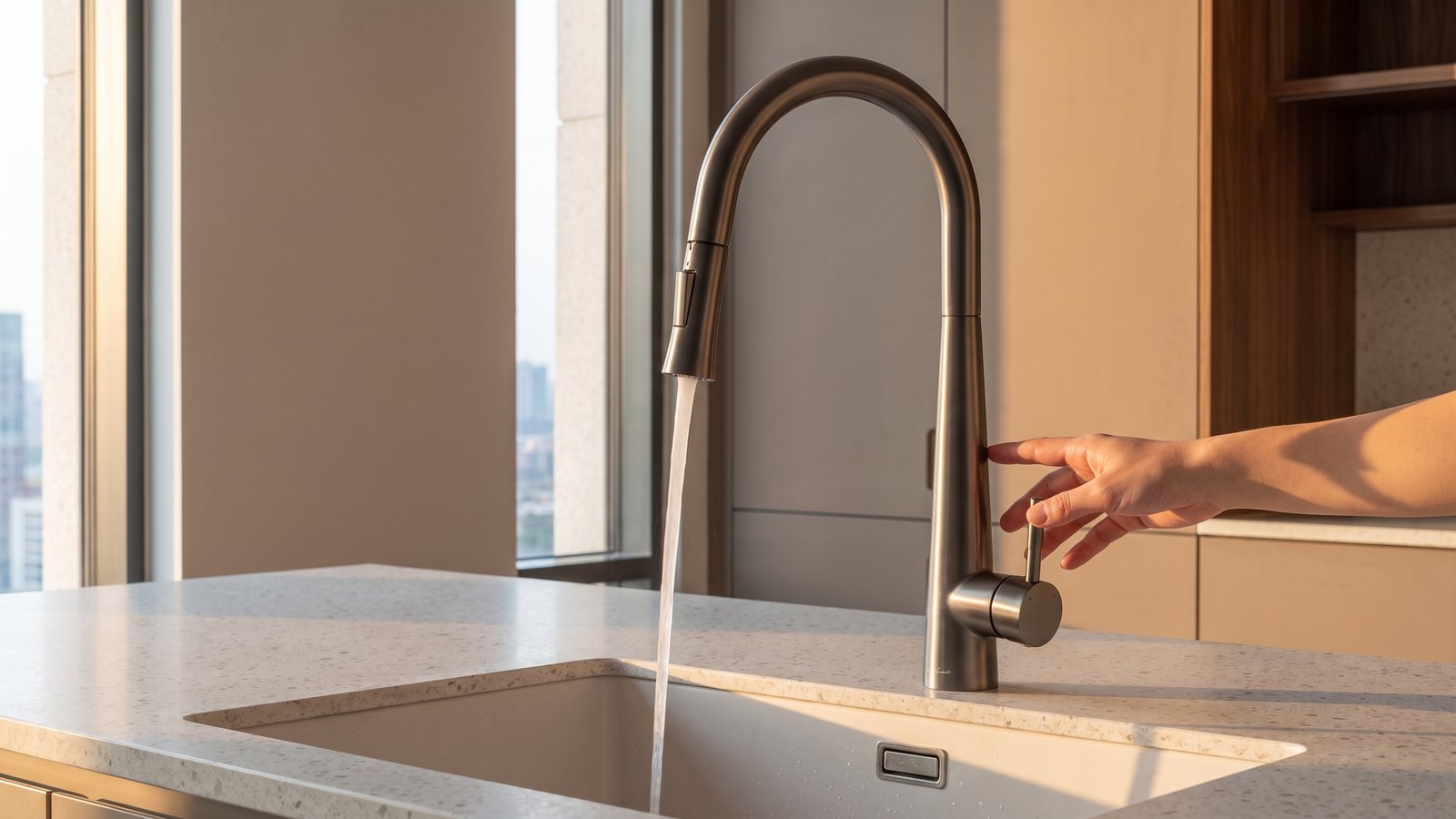
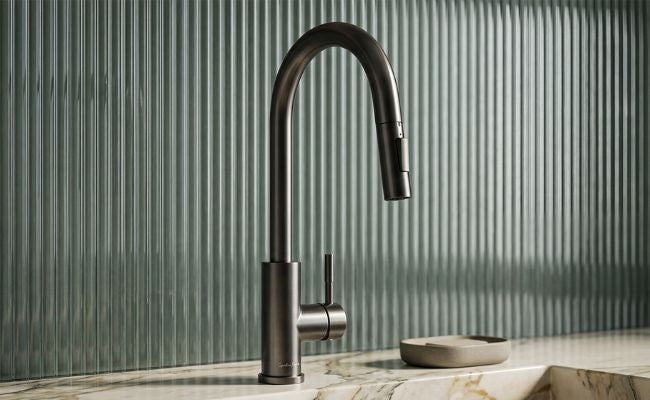
Modern pull down faucets pair that clearance with genuine reach. Our Imperium touch kitchen faucet with gooseneck pull-down sprayer carries a 63 inch spray hose and a spout that swivels a full 360 degrees, so one faucet covers both bowls of a double basin and the counter beside it. If you cook with big cookware more than once a week, this factor alone usually settles the pull down vs pull out kitchen faucet question.


Sink depth and splash control
Sink depth quietly decides how each design feels day to day. In a deep basin, a pull down head aims water straight at the bottom of the sink, which is exactly where rinsing happens, and the basin walls contain any spray. In a shallow basin, that same vertical drop hits the sink floor harder and can bounce water onto the counter.
A pull out head approaches the basin at a flatter angle, so the water lands more gently in shallow sinks and prep sinks. If your sink is on the shallow side, or it is a secondary bar sink, that flatter angle is a real comfort advantage. Switching between an aerated stream for everyday rinsing and a wider spray for cleanup, a two function spray head softens the difference in either design.
The spray head in your hand
A pull down head drops into the sink zone and mostly works below the spout, while a pull out head behaves like a wand you point wherever you need it. That makes pull out heads handy for tasks outside the basin: rinsing the counter edge, watering a plant on the windowsill, filling a coffee maker sitting beside the sink.
Pull down designs answer with control where it counts. A spray head that switches modes with a rocker switch or a squeeze trigger, held directly over the basin, covers the overwhelming share of real sink work. Touch activation raises that convenience further. Tap the spout with a wrist while your hands are covered in flour and the water starts, no grip change required.
Docking: how the spray head comes home
Docking is where cheap sprayer faucets of either type lose their owners, so it deserves real attention before you buy. A pull down head travels a short vertical path back to the spout tip, and gravity works in its favor the whole way. A pull out head has to retract a longer horizontal run of hose back through the spout body, which is why a worn pull out faucet often ends up with a drooping head.
This is also where docking hardware separates good faucets from frustrating ones. A gravity ball weight under the sink keeps the hose pulling the head back to its seat. A magnetic dock adds a positive click at the top so the head cannot sag over time. Our Arcus touch faucet uses both together, a gravity ball on the hose plus a magnetic dock at the spout tip, and its 63 inch spray hose still gives the head generous range around the sink.


Style range: gooseneck, spring, and traditional
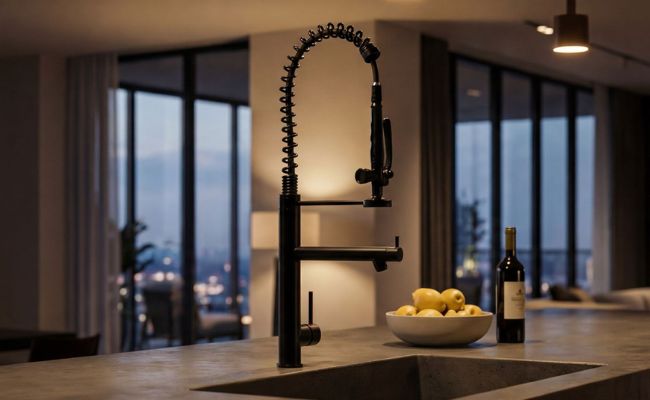
Pull down faucets simply offer more looks. The tall arc reads as a design statement over the sink, and the format spans clean modern goosenecks, industrial open coil spring spouts, and traditional silhouettes with classic lever handles. Finishes run the full range too, from brushed nickel and chrome to matte black, brushed gold, and two tone pairings.
The commercial style deserves a special mention because it only exists in pull down form. An exposed spring spout with a squeeze trigger head brings restaurant kitchen function home, and it pairs naturally with serious cooking setups. Our Klempner commercial kitchen faucet with pull-down sprayer and pot filler takes that further with a separate pot filler spout that swivels 360 degrees, so you can run the sprayer and fill a pot at the same time. Pull out faucets, by their low profile nature, stay visually quiet, which suits a minimalist kitchen but limits your options.


The pros and cons of pull down kitchen faucets
Weighing the pros and cons of pull down kitchen faucets is mostly a question of space. On the pro side: effortless pot filling, a natural downward spray motion, secure docking, the widest style selection, and compatibility with touch activation. The tall arc also keeps the spray head up and out of the way when you are washing large baking sheets or cutting boards.
The cons are physical, not mechanical. A high arc needs vertical clearance, so a window ledge or shelf directly above the sink can rule it out. In very shallow sinks the taller water drop can splash. And in a truly compact kitchen the arc can look oversized against a short run of counter. None of these are flaws in the design. They are fit questions, and a tape measure answers them in five minutes.
When a pull out faucet is the right call
A pull out faucet is the honest recommendation in three situations. First, low clearance: a window sill, an upper cabinet, or open shelving directly above the sink that a tall arc would hit. Second, compact spaces: bar sinks, kitchenette corners, and galley kitchens where a low spout keeps the sightline open. Third, counter-level work: if you regularly fill pots and pitchers standing beside the sink rather than in it, the wand style head reaches them without lifting anything over a tall arc.
If none of those describe your kitchen, the case for pull out thins out quickly, and the everyday advantages of the pull down format take over.
Our verdict: pull down for most kitchens
For the majority of American kitchens, the pull down design wins this comparison. It handles tall cookware without a workaround, points water where sink work actually happens, docks more reliably over years of use, and comes in every style from traditional to commercial. That is why our own kitchen lineup centers on the format, and why you will find gooseneck, spring spout, and touch activated models across our pull down kitchen faucets collection. Choose a pull out only when your space demands it: limited height above the sink, a compact footprint, or frequent counter-level filling. Measure the clearance above your sink, note your basin depth, and the right answer usually becomes obvious.
Frequently Asked Questions
What is a pull down faucet?
A pull down faucet is a kitchen faucet with a tall, high arc spout whose spray head docks at the tip and pulls straight down into the sink. The high arc leaves room to fill tall pots, and the downward motion matches how you naturally rinse dishes in the basin.
What is a pull out faucet?
A pull out faucet is a kitchen faucet with a low, compact spout whose front section detaches and pulls outward, toward you, like a handheld wand. It fits under low windows and shelves and reaches items on the counter easily, which makes it a practical choice for small kitchens and bar sinks.
Are pull down faucets reliable?
Pull down faucets are reliable when the docking system is built properly, because the short vertical hose path puts less strain on the retraction mechanism than a pull out design. Look for a gravity ball or magnetic dock, a stainless steel spray head, and a meaningful warranty. Every faucet we sell carries a 5-year warranty on parts.
Can I replace a pull out faucet with a pull down faucet?
Yes, in most kitchens the swap is straightforward because both designs typically install in a single hole with standard supply connections. Before you buy, measure the vertical clearance above your sink to confirm a high arc spout fits, and check the base dimensions against your existing cutout.
Which design is better for a small kitchen?
A pull out faucet is usually the better fit for a small kitchen because its low spout keeps sightlines open and clears windows and shelving above the sink. If your small kitchen still has open vertical space, a compact pull down model gives you the pot clearance without crowding the room.
Shop the pull down lineup
Every model in the Pull Down Kitchen Faucets collection linked above pairs a high arc spout with a two function spray head. The Imperium and Arcus bring touch activation and gooseneck styling in finishes from brushed nickel to brushed gold, and the Klempner brings the commercial spring spout with its built in pot filler. Start with the collection, filter by finish and style, and match the spout to the clearance you measured over your sink.