
Article: What to Look for in the Best Single Hole Bathroom Faucets
What to Look for in the Best Single Hole Bathroom Faucets
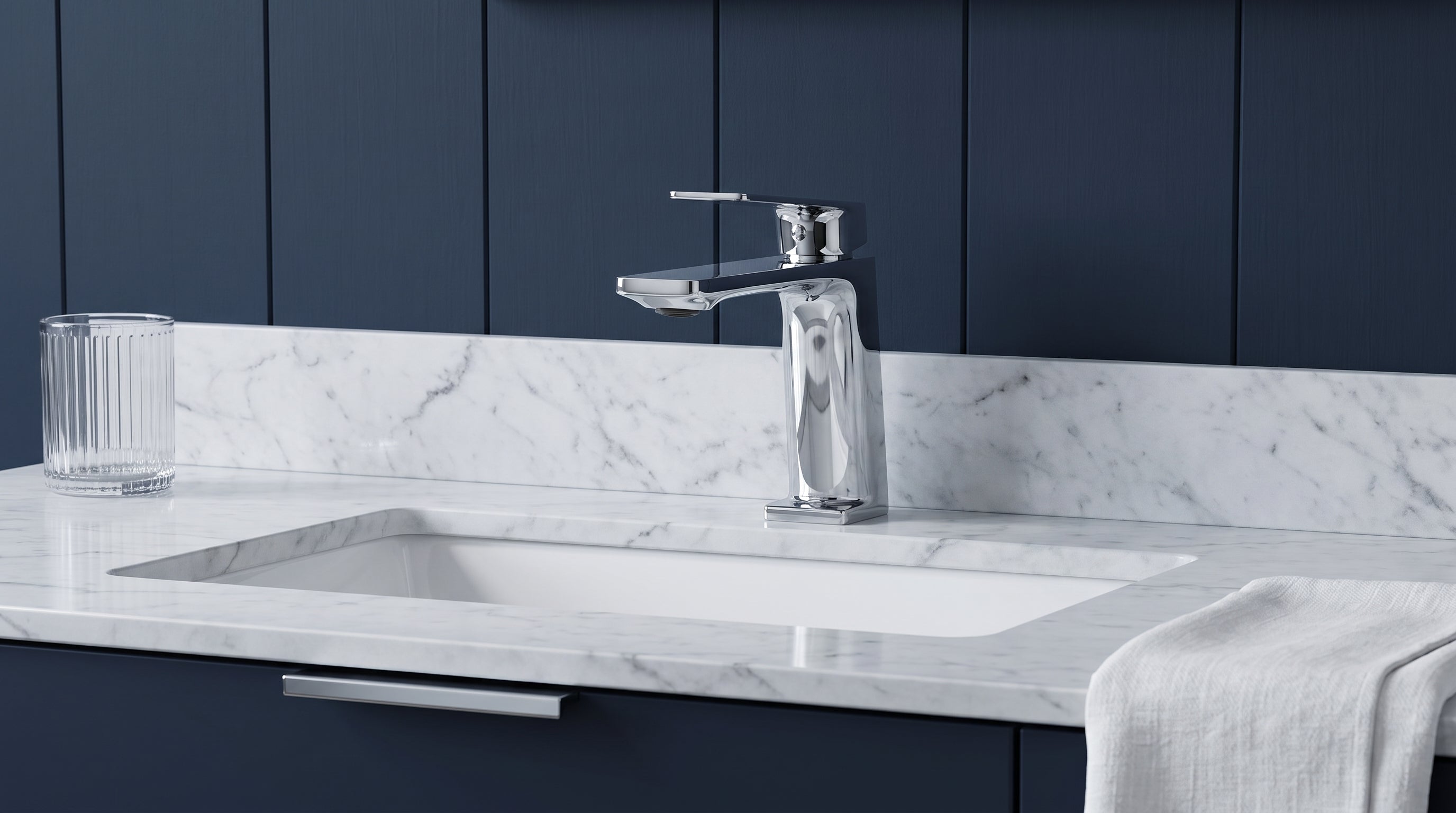
The best single hole bathroom faucets share four traits: a single-handle design that fits a standard 1 3/8 inch to 1 5/8 inch sink hole, a solid brass body for long-term durability, a finish that matches the rest of your bathroom hardware, and a spout style, standard, low-arc, or waterfall, that fits your sink's depth. A single hole faucet is the most common configuration for modern vanities because it needs only one drilled hole, keeps the counter easier to clean, and pairs with almost any sink shape. Before comparing specific models, walk through the factors that separate a good single hole bathroom faucet from a disappointing one.
Most single hole bathroom faucets on the market today are built around the same core decision points. Work through them in order, before you compare specific models, to find a faucet that fits your sink, your plumbing, and how you use the bathroom day to day.
- Hole count and mounting configuration
- Handle count
- Spout style
- Finish and two-tone options
- Body material and construction
- Height and connection sizing
Hole count and mounting configuration
Single hole faucets need exactly one pre-drilled hole in the sink or countertop, and that single-hole requirement is why they dominate modern vanity design. If your sink has three separate holes spaced 8 to 16 inches apart, you are looking at a widespread configuration instead, and if your plumbing runs through the wall rather than the deck, a wall-mounted faucet is the only option. Check your sink's existing hole pattern before shopping to avoid the most common return reason for bathroom faucets: a faucet that does not physically match the counter.
Measure twice here. A single hole faucet can sometimes be adapted to a three-hole sink with a deck plate, covered in the FAQ below, but a widespread or wall-mount faucet cannot be adapted down to a single hole sink without replacing the countertop or wall plumbing. Know which category you are shopping in from the start, and you save a return trip.
Handle count
A single handle faucet controls both hot and cold water through one lever, wheel, joystick, or blade-style handle, and it is the standard choice for a single hole installation. Two-handle faucets, which separate hot and cold control into two separate levers or knobs, are built for wider three-hole or widespread setups instead, since each handle needs its own dedicated hole. If you are replacing a faucet in an existing single hole sink, a single handle model is almost always the correct fit, and it is also the easier of the two to operate one-handed while washing up.
Spout style
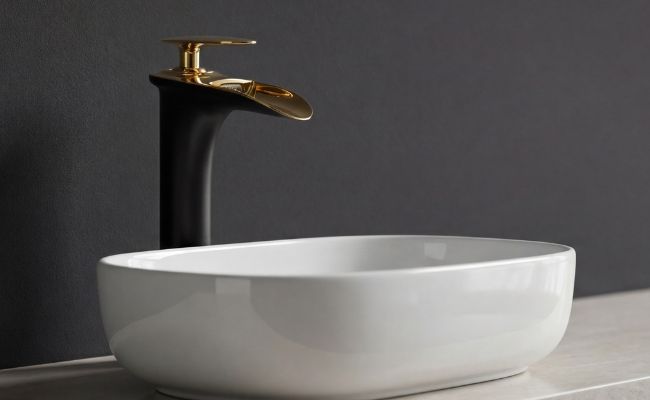
Spout style affects both look and splash behavior. A standard spout delivers a traditional arc of water and works well with most sink depths. A low-arc spout sits closer to the basin, which suits shallower vessel sinks and keeps the overall profile compact and unobtrusive. A waterfall spout releases water in a wide, flat sheet rather than a stream, giving the fixture a more contemporary, architectural look. Check that your sink basin is deep enough to contain the wider flow pattern before choosing one, since a shallow basin can lead to splashing outside the bowl.

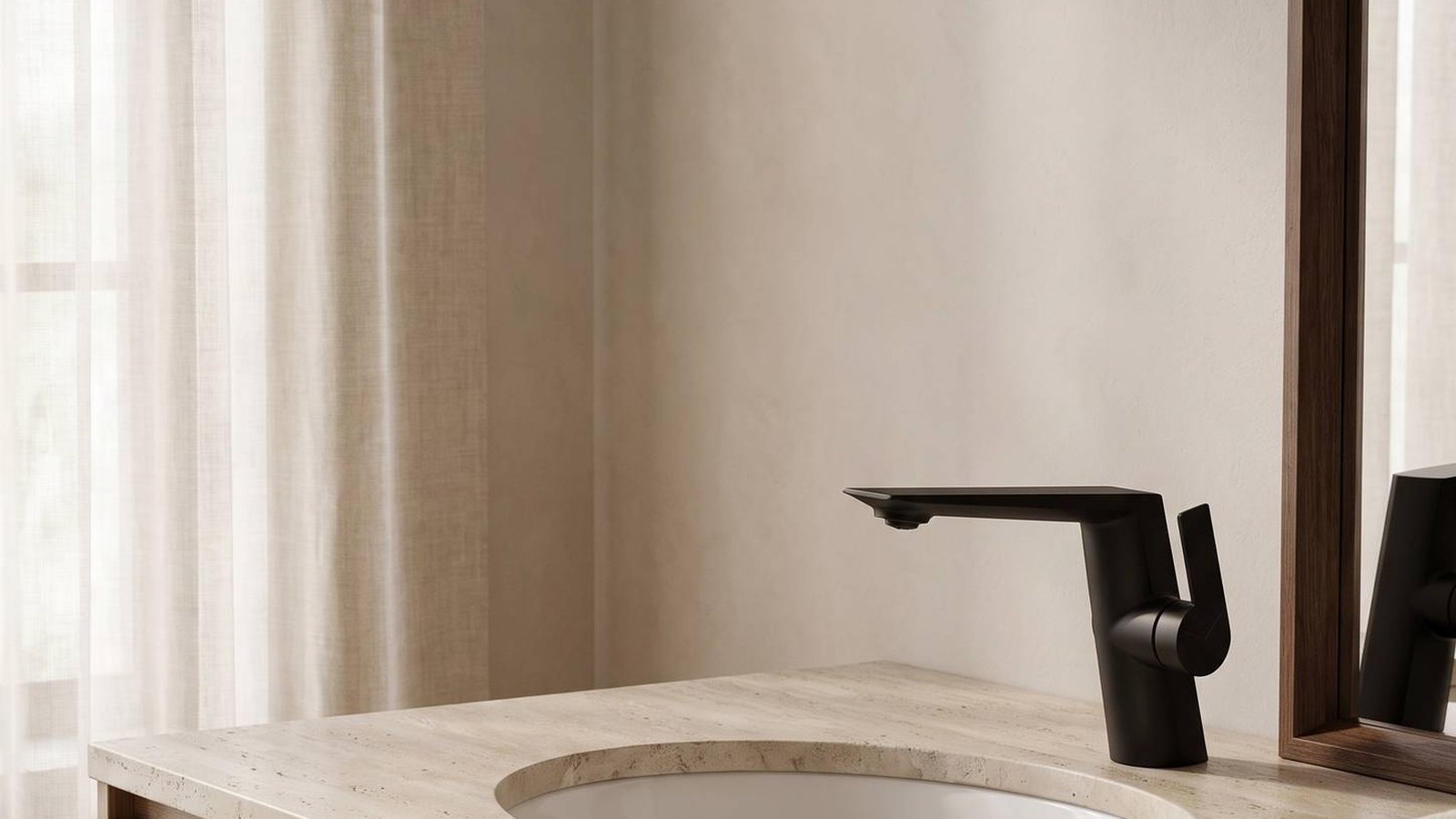
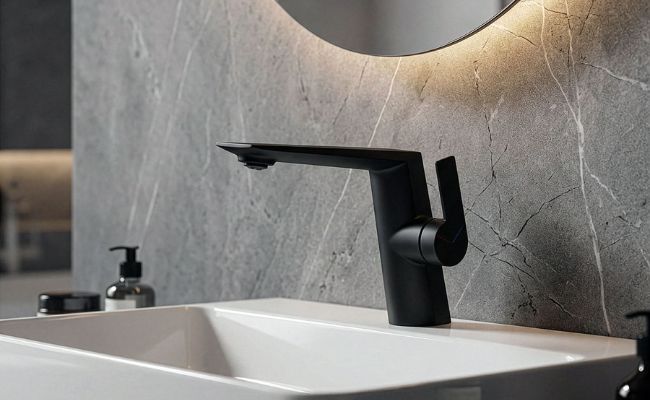
The Kissinger single hole faucet is a good example of the low-arc approach: a single hole, single handle design with a compact low-arc spout, a 6.18 inch overall height, and a G9/16 inch connection size that fits standard US supply lines. It also carries CE certification and is built lead-free. Check these details on any faucet you compare, since not every listing spells them out.

Finish and two-tone options
Finish is where most of the visual decision-making happens once the mounting and handle questions are settled. Chrome and brushed nickel read as classic and blend into most existing hardware without competing for attention. Matte black and gun metal read as more contemporary and pair well with darker cabinetry or black hardware elsewhere in the room. Gold and brushed gold finishes suit warmer, more traditional bathrooms, especially alongside brass or bronze accents. Several single hole faucets also come in two-tone combinations, such as matte black paired with gold or bronze accents, or white paired with chrome or gold. These two-tone options let the faucet double as a design accent for the room.

The Helfer waterfall single hole faucet illustrates the finish range well: it ships in chrome, brushed nickel, gold, and two-tone white-and-chrome, white-and-gold, and matte-black-and-bronze options, all on the same single hole, single handle waterfall body, and in short or tall spout heights depending on the sink.

Body material and construction
Solid brass is the standard body material for a single hole bathroom faucet meant to last. It resists corrosion and holds a finish better than lighter-weight alternatives over years of daily use. Confirm lead-free construction rather than assume it, since it matters for any faucet that carries drinking water and not every listing states it clearly. A solid brass body with a lead-free rating is a safer long-term bet than one where the material goes unspecified, and it is one of the few specs to read closely before you add a faucet to your cart.
Height and connection sizing
Overall height determines how much clearance you have for hand washing and how the faucet looks relative to the sink basin, so compare it against your current fixture rather than guessing. Connection size and hose type, most commonly a 3/8 inch compression fitting, need to match your existing supply lines, or the swap becomes a bigger plumbing job than expected. If a listing includes exact measurements, such as a 6.18 inch overall height or a specific connection size, that is a sign the manufacturer documented the fixture properly, a good indicator of build quality across the board.
The Drexler single hole faucet is available in both a short and a long spout height, single hole and single handle throughout, which makes it a useful reference point for how much a faucet's proportions can change while the mounting requirements stay exactly the same.

Putting it together
A single hole bathroom faucet is the right call for most standard vanity sinks: one hole, one handle, and a wide range of spout styles and finishes to choose from. Once you know your sink's hole pattern, decide between a standard, low-arc, or waterfall spout based on basin depth, pick a finish that matches your existing hardware, and confirm the body is solid brass and lead-free. From there, the remaining decision is largely aesthetic. Single handle faucets in this configuration are also simpler to install than widespread or wall-mounted alternatives, since there is only one hole to seal and one set of connections to make. That matters if you plan to install it yourself rather than hire a plumber.
Matching the rest of the room
A single hole bathroom faucet does not exist in isolation. Once you settle on a finish, step back and look at the rest of the room: cabinet hardware, towel bars, light fixtures, and the shower faucet if it is visible from the same sightline. You do not need every metal finish in a bathroom to match exactly, but a single hole faucet in brushed gold next to towel bars in cool chrome can read as an unplanned mismatch. Matte black and brushed nickel are the most forgiving finishes to mix with other metals already in the room, while gold and rose gold finishes look best when at least one other fixture nearby echoes the same warm tone. If you are renovating rather than doing a single swap, choose the faucet finish before the rest of the hardware, since finish options are narrower than the range available for cabinet pulls or towel bars.
Frequently Asked Questions
What size hole does a single hole bathroom faucet need?
Most single hole bathroom faucets are designed for a standard 1 3/8 inch to 1 5/8 inch sink hole. Measure your existing hole before ordering, since a faucet built for a widespread or three-hole setup will not fit a single hole sink.
What is a deck plate, and when do I need one?
A deck plate, sometimes called an escutcheon, is a flat plate that sits under the faucet and covers the outer openings of a three hole sink so a single hole faucet can mount through the center one. It is a separate part, not something the faucet includes, and it should match the faucet finish. You only need one when the sink has more openings than the faucet uses.
Is a waterfall spout harder to keep clean than a standard spout?
Not meaningfully. A waterfall spout releases water in a flat, wide sheet rather than a narrow stream, so it needs a sink basin deep enough to contain the flow, but day-to-day cleaning is the same as any solid brass fixture.
What if the faucet I order does not fit my bathroom?
Every faucet is covered by our 90-day no-hassle return policy, so you can send it back if it does not work out. All faucets also carry a 5-year warranty on parts and ship free from our US warehouse.
What is the difference between a single hole and a widespread faucet?
A single hole faucet mounts through one opening and controls hot and cold from one handle. A widespread faucet uses three separate openings, typically spaced 8 to 16 inches apart, with the spout in the center and a handle on each side. The difference is decided by your sink, not by preference: count the openings before you shop, because a widespread faucet cannot be fitted to a single hole sink.