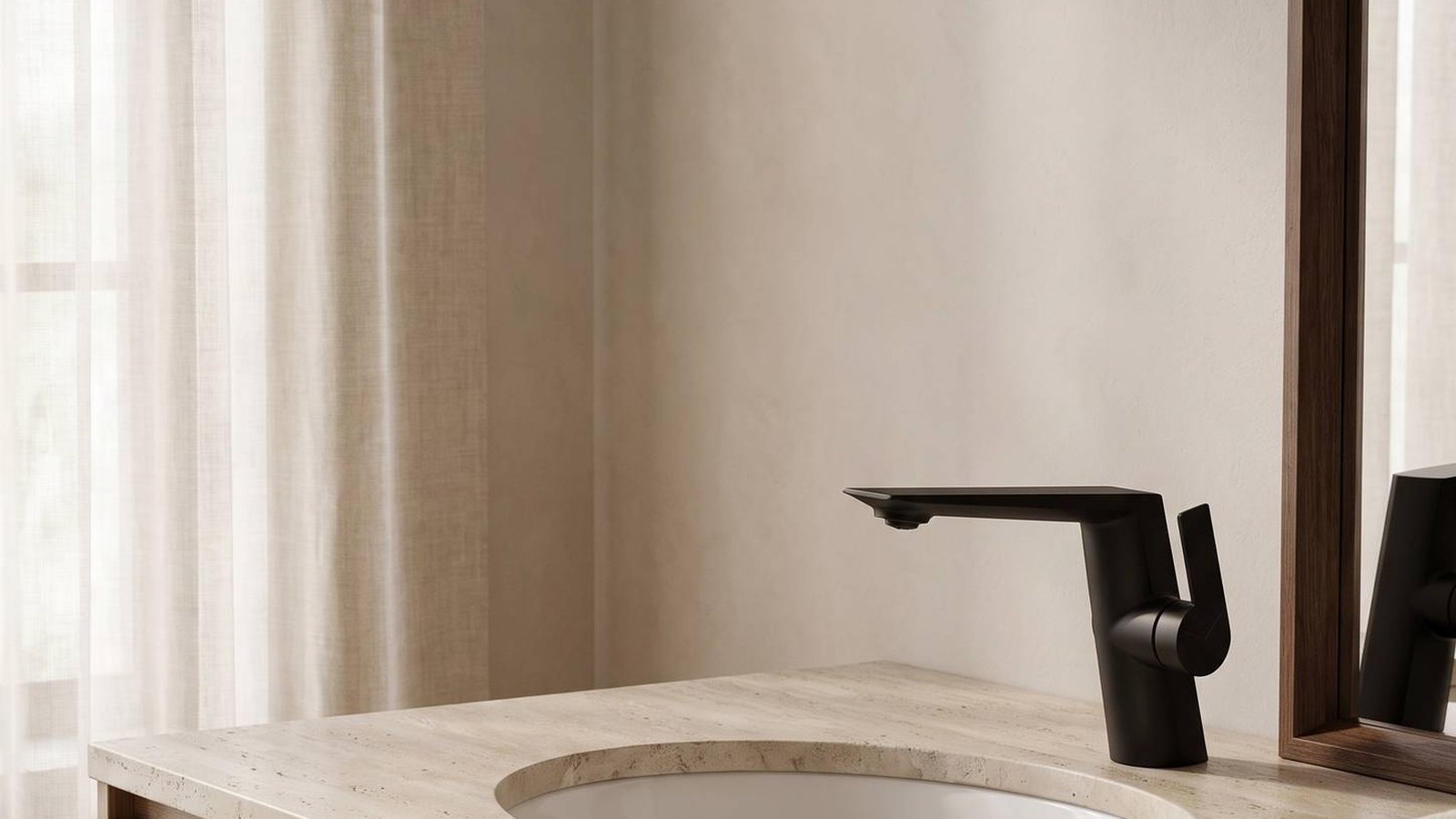
Best Bathroom Faucets: How to Choose the Right One for Your Sink
The best bathroom faucets get three things right before finish ever enters the conversation: they match the hole configuration already cut into your sink, they sit at a height that lands water near the center of the basin instead of splashing the rim, and they are built from solid brass rather than a lightweight look-alike alloy. This bathroom faucet buying guide walks through six decisions in the order that actually prevents returns, grounded in the real specs of the Signature Faucets bathroom lineup rather than generic advice. Work through them from top to bottom, in this order, and you land on a faucet that fits your sink and your habits on the first try, whether you're swapping one dated fixture or planning a full remodel.
The six decisions, in order
- Hole configuration. Count your sink's openings before you look at a single photo.
- Handle count and style. One lever for quick daily use, or two handles for exact temperature control.
- Spout style and height. Low arc or waterfall, short or tall, matched to how your basin sits.
- Finish. The metal you touch and wipe down every day, not the one that photographs well.
- Material and build. What's inside the body matters more than what you can see in a listing photo.
- Style. Modern, industrial, or somewhere between, chosen last so it doesn't override fit.

1. Start with your sink's hole configuration
Look at your sink or counter and count the mounting holes before anything else. The three types of bathroom faucets you'll run into most often are single hole, 3 hole, and wall mount, and the sink you already own decides this for you before taste gets a vote.
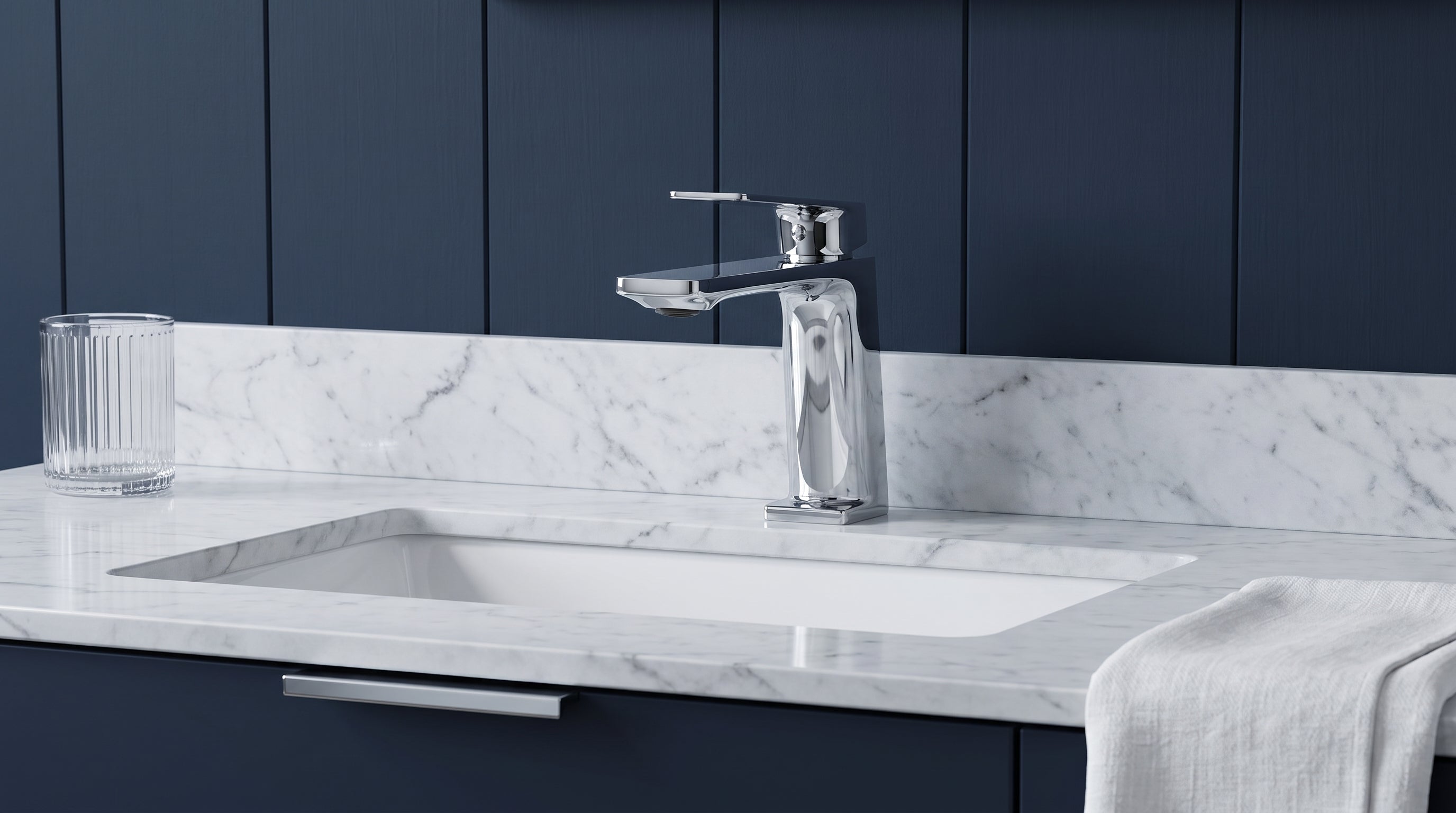
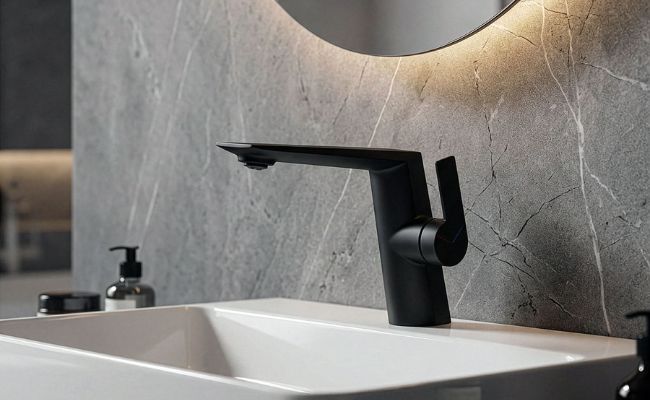
A single hole bathroom faucet combines the spout and handle into one compact body that mounts through a single opening. It's the default for smaller vanities and cleaner lines, which is why most of the current Signature Faucets bathroom lineup, including the Kissinger and the Harris, is built this way. One catch worth knowing: if your counter already has three openings, a single hole faucet won't cover the extra two on its own. You'll either need a separate deck plate or a true 3 hole design.
3 hole faucets, like the square-spouted Freyer, pair a center spout with two separate handles and use all three openings, which suits wider vanities and more traditional layouts. Wall mount faucets come out of the wall above the basin instead of the deck. They free up counter space and make wiping down the sink easier, but they need plumbing run inside the wall, so they belong on a remodel timeline, not a weekend swap.


2. One handle or two
A single handle controls temperature and flow in one motion, which is the practical pick for a busy family bathroom or anyone who wants the fastest path to warm water. Two handles give you separate hot and cold control for an exact mix, and their symmetry reads more traditional on a wide vanity.
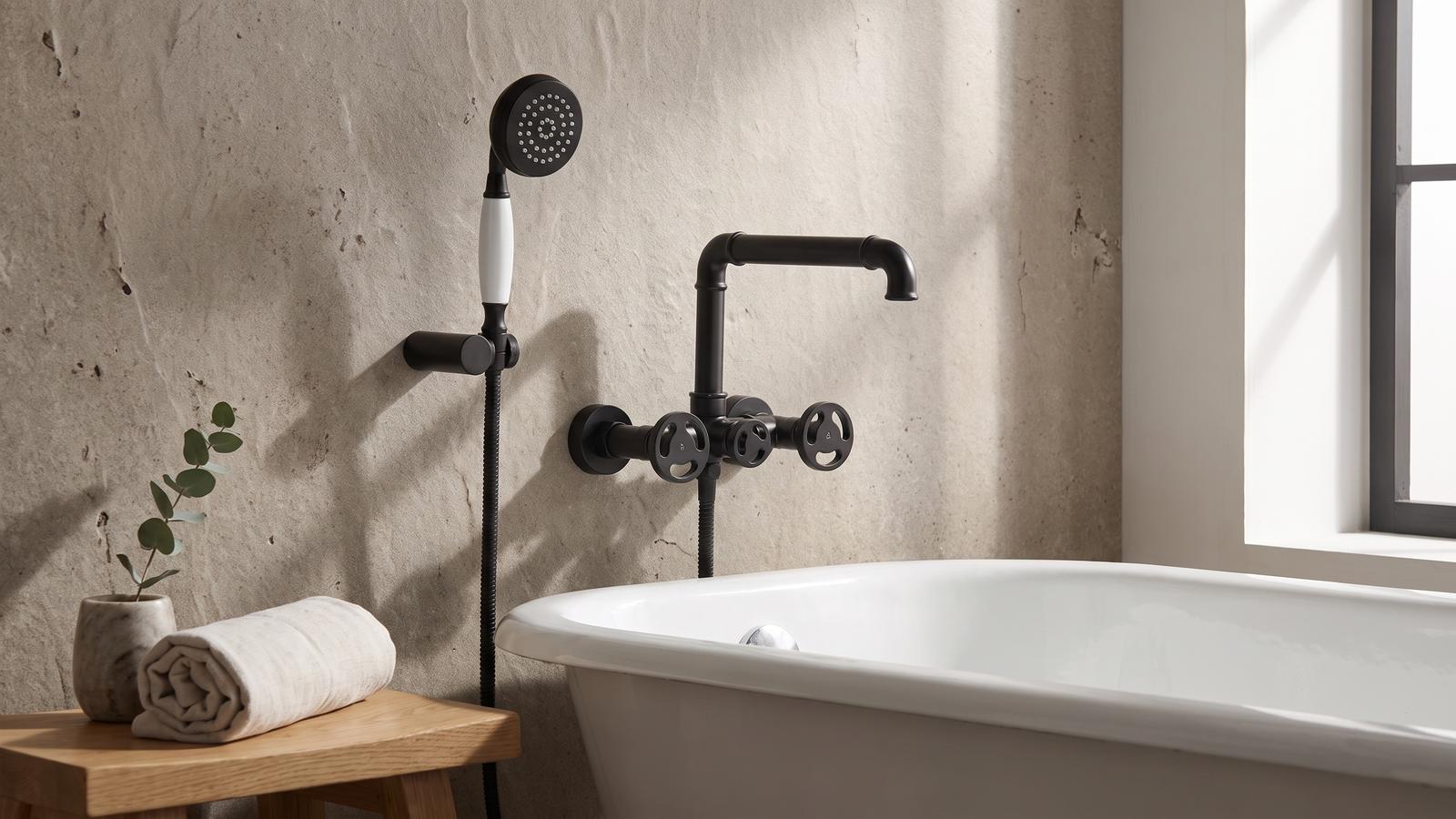
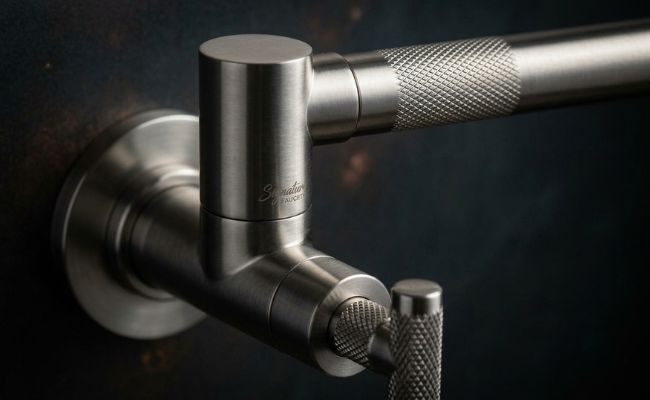
Handle style changes how a faucet feels to use as much as how it looks. Across the current lineup you'll find slim levers on the Helfer and Drexler, a joystick on the Harris, a flat blade on the Cölm and Freyer, and knurled wheel handles on the Imdorf models. If anyone in the house has limited grip strength, a lever or joystick is easier to operate with a wrist or forearm than a wheel or knob.
3. Spout style and bathroom faucet height
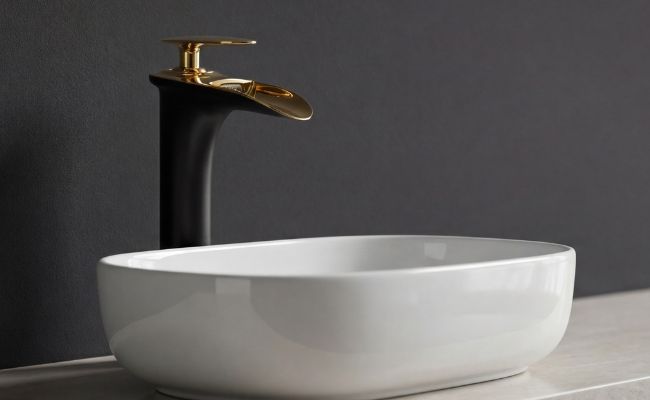
Spout design decides how water arrives in your basin. Low arc spouts, like the ones on the Kissinger and Harris, keep a compact profile and cut down on splash in shallower sinks. Waterfall spouts, found on the Helfer and Dunkel, deliver water in a wide open sheet, which turns a daily-use fixture into something you notice every time you walk past it.
Bathroom faucet height matters as much as spout style. A spout that sits too tall over a shallow basin splashes; one that sits too short over a raised vessel bowl leaves you scrubbing knuckles against the rim. As a working rule, standard drop-in and undermount sinks pair well with a shorter spout in the 6 to 7 inch range, while a basin that sits above the counter needs a taller body. The Helfer and Drexler each come in a 6.1 inch and an 11.4 inch version for exactly this reason, and the Dunkel offers 7.02 inch and 11.02 inch options. Measure from the mounting surface to the rim of your basin before you order, then confirm the spout clears it with room to spare.


4. Bathroom faucet finishes: weigh maintenance, not only color
Finish is where most people start shopping, and it earns the attention, because bathroom faucet finishes set the tone for every other metal in the room, from the mirror frame to the drawer pulls. The current lineup spans polished chrome, brushed nickel, gold and brushed gold, matte black, gun black, gunmetal gray, white, and an antique finish, with two-tone pairings like white and gold or matte black and bronze for anyone bridging two metals already in the space.
The short version:
- Polished chrome wipes clean fastest, but shows water spots and fingerprints soonest.
- Brushed finishes (brushed nickel, brushed gold) hide spots and fine scratches well, which makes them a low-maintenance choice for a kids' bathroom.
- Matte black gives the strongest contrast against a white basin and hides water marks, but prefers a soft cloth over anything abrasive.
- Two-tone finishes are the diplomatic option when two metals already exist in the room and neither one is going away.
If hard water is a known issue in your house, finish choice carries more weight than usual, since mineral buildup shows differently on each metal. Our separate guide to the best bathroom faucets for hard water covers which finishes and materials hold up best against scale and spotting.
5. Material and build quality
A product photo can't show you the difference between a solid brass faucet and a lookalike alloy one, but a year of daily use will. Brass resists corrosion from constant water contact, keeps internal threads and cartridges seated tight, and takes an even plating coat, which is why the Signature Faucets bathroom lineup is built around solid brass bodies. When you compare the best bathroom faucets side by side in person rather than in photos, weight is an honest tell, since a solid brass body has real heft in the hand.
Lead-free construction is worth checking on any spec sheet, not just ours. Under the EPA's 2014 lead-free plumbing standard, which amended the Safe Drinking Water Act, fixtures sold for potable water use in the United States must contain no more than a weighted average of 0.25 percent lead. Every faucet in our bathroom lineup meets that standard, and every one carries a 5-year warranty, which is a fair proxy for how long the internals and the finish are built to last. A faucet gets touched thousands of times a year, so this is the one line item where cutting corners costs the most down the road.
6. Settle the style question last
Once fit, handles, height, material, and finish are decided, style becomes the fun part instead of the confusing one. The current lineup falls into four rough families. Modern and minimalist pieces, like the Kissinger and Drexler, use clean lines and quiet geometry that settle into most rooms without shouting. The Cölm adds one deliberate sculptural flourish to that same modern base. Industrial designs, like the Imdorf models with their wheel handles, bring workshop character to a powder room. Waterfall pieces such as the Helfer and Dunkel skew modern but read as a small daily statement in almost any setting.
A reliable shortcut for the final call: match the faucet to the two or three largest fixed elements in the room, usually the vanity, the tile, and the mirror frame, rather than to accessories you can swap out next year.

How to choose a bathroom faucet: the quick checklist
Here is the whole guide condensed into one pass you can run against any product page.
| Decision | What to check | Options in our lineup |
|---|---|---|
| Hole configuration | Count the openings in your sink or counter | Single hole, 3 hole, wall mount |
| Handles | One-motion control vs. exact mixing; grip comfort | Lever, joystick, blade, wheel; one or two handles |
| Spout and height | Basin depth and rim height; splash clearance | Low arc and waterfall; roughly 6.1 to 11.4 inch heights |
| Finish | Other metals in the room; your cleaning habits | Chrome, brushed nickel, gold, brushed gold, matte black, gun black, gunmetal gray, white, antique, two-tone |
| Material | Body material, lead-free listing, warranty length | Solid brass, lead-free construction, 5-year warranty |
| Style | Match the vanity, tile, and mirror | Modern, minimalist, contemporary, industrial |
Frequently Asked Questions
What type of bathroom faucet is best for a small bathroom?
A single hole, single handle faucet with a compact spout in the 6 to 7 inch range. It needs the least counter space, keeps the sink area looking clean, and installs through one opening instead of three.
How tall should a bathroom faucet be?
Tall enough that the spout clears the basin rim with a couple of inches to spare, and short enough that the stream lands near the drain instead of the rim. Shorter 6 to 7 inch spouts suit standard drop-in sinks, while taller 11 inch bodies suit basins that sit above the counter.
Which bathroom faucet finish is easiest to maintain?
Brushed finishes like brushed nickel and brushed gold hide water spots and fingerprints best. Polished chrome wipes clean fastest but shows spots sooner, and matte black hides marks well as long as you skip abrasive cleaners.
What do the best rated bathroom faucets have in common?
Solid brass construction, a finish that still looks new after months of cleaning, smooth handle action, and the correct fit for the sink it sits on. A surprising share of disappointing reviews trace back to fit rather than build quality, which is why this guide starts with hole configuration instead of finish.
What if the faucet does not work out in my bathroom?
Every Signature Faucets order includes a 90-day no-hassle return window, a 5-year warranty on the faucet itself, and Free US based shipping, so you can order the finish you've been debating and judge it in your own light before committing.
Shop Bathroom Faucets
These three models cover the main configurations in this guide, and the full collection carries the rest.
- Kissinger single hole bathroom faucet: a compact modern single handle design, about 6.18 inches tall, lead-free, in five finishes including matte black and brushed gold.
- Helfer waterfall basin sink faucet: an open waterfall spout with a lever handle, offered in a short 6.1 inch and a tall 11.4 inch version across seven finishes.
- Freyer square two handle faucet: a solid brass 3 hole design with blade handles, available in matte black, chrome, and gunmetal gray.
Want to compare every option side by side? Browse the full bathroom faucets collection and filter by hole configuration, finish, and style.