The Best Bathroom Faucets for Hard Water: A Buying Guide
The best bathroom faucets for hard water share three traits: a spot hiding finish like brushed nickel, a solid brass body that resists corrosion as minerals build up, and a simple silhouette you can wipe clean in seconds. Hard water will not destroy a well made faucet. It leaves chalky mineral deposits, called limescale, on every surface the water touches, and cheap finishes and zinc alloy bodies lose that fight within a few years. This guide walks through the five decisions that matter most when you are choosing a faucet for a home with mineral heavy water: finish, body material, spout design, handle type, and the small parts that scale attacks first. Every recommendation is grounded in the faucets we carry at Signature Faucets.
The Short Version
- Brushed nickel is the most forgiving finish in hard water. The brushed texture hides water spots and fingerprints between cleanings.
- Solid brass bodies resist the corrosion that mineral rich water accelerates in cheaper zinc alloy faucets.
- Simple single handle silhouettes have fewer seams and crevices where scale can settle.
- Waterfall spouts pour through an open channel, so there is no aerator screen to clog with mineral grit.
- On standard spouts, a removable aerator turns descaling into a two minute job instead of a replacement.
Why Hard Water Is Hard on Bathroom Faucets
Hard water is water that carries a high concentration of dissolved calcium and magnesium minerals. The U.S. Geological Survey classifies water above 121 milligrams of dissolved minerals per liter as hard, and above 180 as very hard, a range that covers large parts of the American Midwest, Southwest, and Florida. When that water dries on metal, the minerals stay behind as white scale.
Scale is more than a cosmetic problem. Deposits build up inside the spout and around the aerator, narrowing the water path and weakening flow over time. On the outside, mineral residue dulls delicate finishes, and repeated scrubbing with harsh cleaners wears them down further. The most hard water resistant bathroom faucets are designed so that both problems stay small: finishes that hide residue instead of highlighting it, and bodies that shrug off corrosion for decades.
How to Choose: The Five Factors That Matter
- Finish. The single biggest difference in daily life. Brushed finishes hide spotting; dark and polished finishes show it.
- Body material. Solid brass resists corrosion. Zinc alloy does not.
- Spout design. Open waterfall spouts have no screen to clog. Standard spouts should have a removable aerator.
- Handle type. One smooth handle wipes clean faster than two ornate ones.
- Serviceable parts. Scale attacks the aerator and cartridge first, so easy access matters.

1. Finish: The Biggest Difference Maker
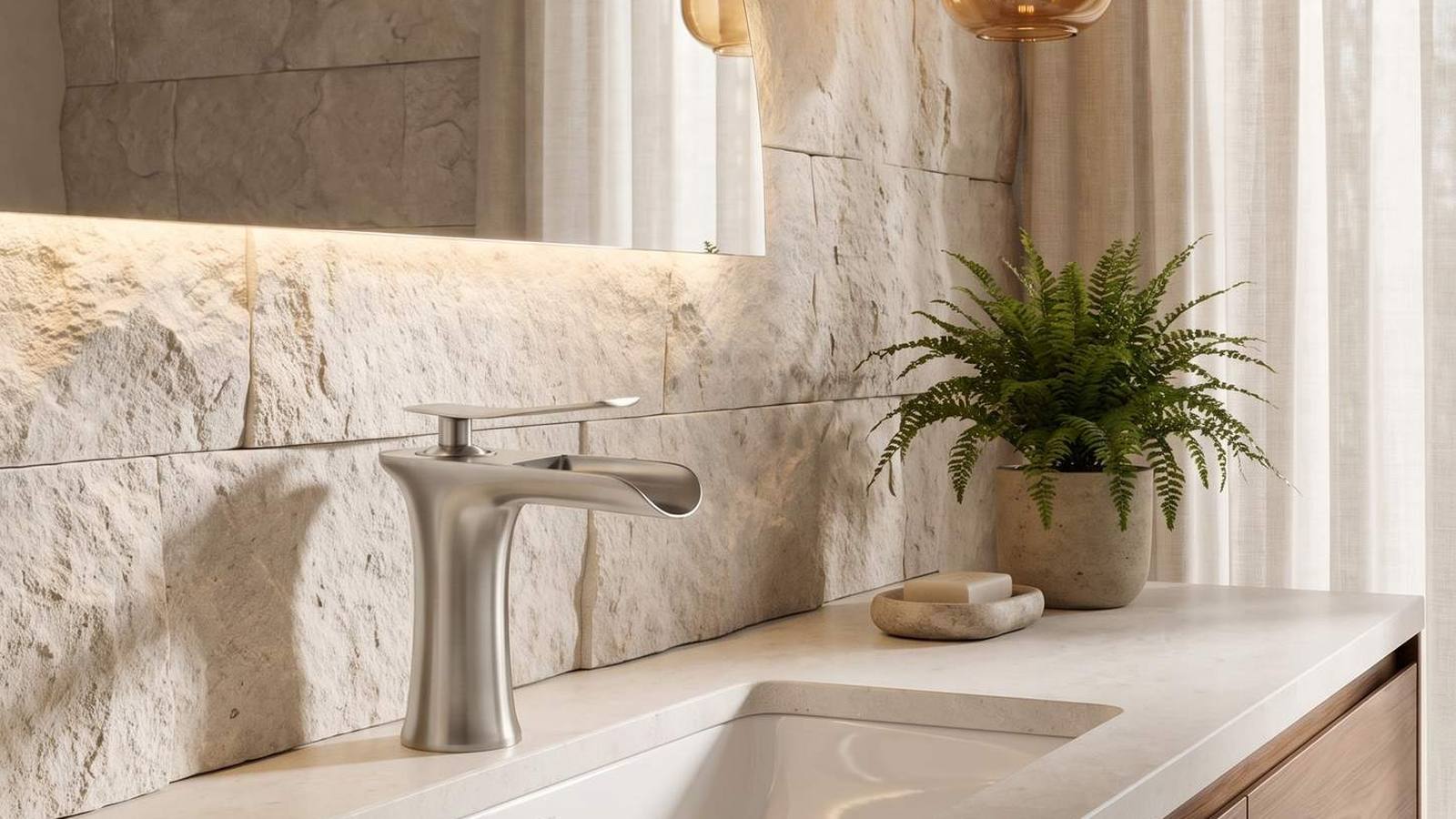
Ask what faucet finish is best for hard water and the honest answer is brushed nickel. The fine brushed grain scatters light, so dried water spots and light mineral haze fade into the texture instead of standing out against a mirror surface. Brushed gold behaves the same way for homes that lean warm.
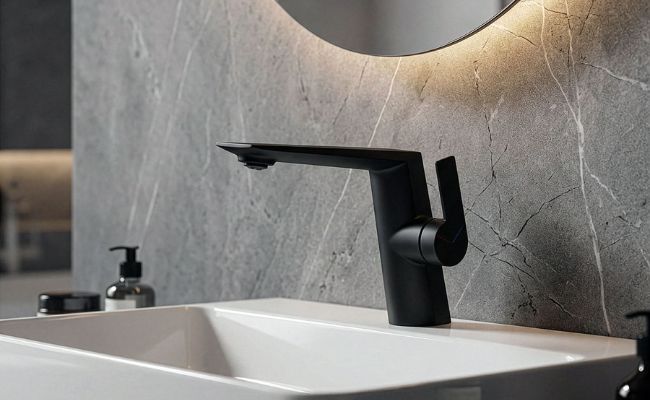
Polished chrome sits in the middle. Spots show quickly on its mirror shine, but chrome is tough, and a ten second pass with a dry cloth brings it right back. Matte black is the finish that asks the most of you in hard water. White scale is at its most visible on a dark surface, so plan on drying the faucet after use if you love the look. In our lineup, the Drexler single handle faucet in brushed nickel is the practical pick here. It is solid brass, comes in a short 6.1 inch or tall 11.4 inch version to fit your basin, and its smooth lever body wipes down in one motion.

2. Body Material: Solid Brass Outlasts the Minerals
The best corrosion resistant bathroom faucets are built on solid brass. Brass is naturally resistant to the pitting and internal corrosion that mineral heavy water accelerates, which is why it has been the plumbing standard for over a century. Budget faucets often substitute zinc alloy under the same finish, and the difference does not show in a photo. It shows three years in, when a zinc body starts to corrode from the inside out.
Across our bathroom faucets collection, models like the Helfer, Drexler, Dunkel, and Harris are all machined from solid brass. Weight is the quick test if you are ever unsure at a store shelf: brass feels dense and substantial in the hand, while zinc feels light for its size.
3. Spout Design: Waterfall vs Standard Spouts
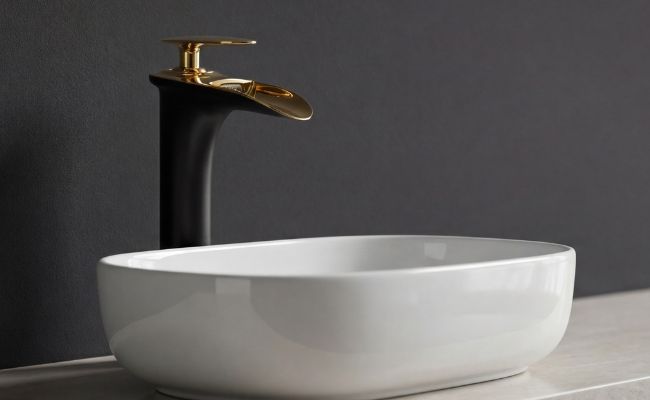
A waterfall spout pours water through an open channel rather than pushing it through an aerator screen. That design choice matters in hard water because there is no fine mesh for mineral grit to clog. The open spillway is also easy to see and easy to wipe, so scale never builds unnoticed inside a hidden screen.
The Helfer waterfall bathroom faucet is our reference for this style. It comes in brushed nickel among its seven finish options, in 6.1 inch and 11.4 inch heights, and its flat open spout wipes clean edge to edge. A standard spout is still a fine choice, and most of our collection uses one. Make sure the aerator unscrews by hand or with a simple tool, because that is the part you will want to rinse clean once or twice a year.


4. Handle Type: Fewer Crevices, Easier Cleaning
Every seam on a faucet is a place where mineral residue collects. A single handle design keeps the silhouette to one body and one lever, which is exactly two surfaces to wipe. Two handle faucets with sculpted crosses or ornate bases look beautiful, but in hard water each extra edge is another line of white buildup to chase with a cloth.
Most of our bathroom lineup is single handle and single hole for this reason. A good example of the low maintenance shape is this low profile single handle design: it stands 6.18 inches tall, is certified lead free, connects with standard 3/8 inch compression fittings, and its rounded one piece body gives scale almost nowhere to hide. In brushed gold or chrome it stays presentable with nothing more than a weekly wipe.


5. Cartridge and Aerator: The Parts Scale Attacks First
Scale does its worst work where water sits still. Inside a faucet, that means the aerator screen at the tip and the cartridge that controls flow. When you compare models, look for a ceramic disc cartridge, which seals with two polished ceramic plates that mineral grit struggles to damage, and an aerator you can remove without a plumber.
Then adopt one small habit. Once or twice a year, unscrew the aerator and let it sit in warm white vinegar for a few minutes while you wipe the spout, then rinse and thread it back on. Sixty seconds of attention a few times a year is the difference between a faucet that flows like new at year ten and one that dribbles at year three. One caution: keep vinegar and abrasive pads away from matte black and other delicate finishes, and stick to mild soap and a soft cloth on the faucet body itself.
Quick Comparison: Faucet Finishes in Hard Water
| Finish | How it handles hard water | Cleaning notes |
|---|---|---|
| Brushed nickel | Best all around. The brushed texture hides spots and light scale. | Dry cloth wipe. Mild soap for buildup. |
| Brushed gold | Similar spot hiding texture with a warmer tone. | Mild soap and water. Skip harsh chemicals. |
| Chrome | Shows spots quickly but takes cleaning well. | The easiest finish to polish back to bright. |
| Matte black | White mineral spots are most visible here. | Soft damp cloth only. Dry after use. |
| White and two tone | Painted white surfaces hide chalky residue well. | Gentle cleaners keep the contrast crisp. |
Frequently Asked Questions
What faucet finish is best for hard water?
Brushed nickel is the best faucet finish for hard water because its textured surface hides water spots and light mineral haze. Brushed gold offers the same practical benefit in a warmer tone, while polished chrome shows spots faster but cleans up easily.
What is the best type of faucet for hard water?
The best bathroom faucet for hard water is a solid brass, single handle model in a brushed finish, with either an open waterfall spout or a removable aerator. That combination resists corrosion, hides spotting, and keeps descaling to a quick seasonal task.
Does hard water ruin bathroom faucets?
Hard water shortens the life of faucets with zinc alloy bodies and fragile finishes, but a solid brass faucet with a durable finish handles it well for decades. Occasional aerator cleaning and a regular wipe down prevent nearly all long term damage.
How do I remove hard water stains from a bathroom faucet?
Wipe the faucet with a soft cloth and mild soapy water, then dry it fully. For stubborn scale on the aerator, unscrew it and soak it in warm white vinegar for a few minutes before rinsing. Avoid abrasive pads and harsh chemicals, especially on matte black and other delicate finishes.
Is hard water damage covered by a faucet warranty?
Mineral buildup is a maintenance item rather than a defect, so routine descaling is up to you. That said, every faucet we sell is covered by a 5 year warranty against manufacturing defects, and unused faucets in original packaging can be returned within 90 days under our No Hassle return policy.
Shop the Collection
These are the three faucets from this guide, chosen for finishes and shapes that stay ahead of hard water:
- Drexler Single Handle Bathroom Sink Faucet, solid brass with a brushed nickel option in two heights
- Helfer Waterfall Basin Faucet, an open channel spout with no aerator screen to clog
- Kissinger Single Hole Bathroom Faucet, a lead free certified one piece silhouette that wipes clean in seconds
Each one is linked in its section above, along with the full collection, so you can compare finishes side by side and pick the one your water will be kindest to.